Inventing Milanese Dishes - STORIES
I first hosted a workshop at BASE Milano back in 2023, using the tomato as a research entry point to examine the invented nature of “traditional cuisine” and the mechanisms of nationalising foodways. This research eventually led to a collaboration with the ceramic studio Liquid Rituals, founded by Giulia Braglia and Gabriele Nasole. During Milan Design Week 2026, we hosted a dinner at BASE Milano where the food I prepared was served in Liquid Rituals’ bespoke ceramic vessels, creating an embodied and sensory experience that challenged the boundaries of regional identity. The following is the written version of the event.
Before my first visit to Milan, I searched the internet for “must-have” dishes, as I do with every new city that I visit. I was flooded with countless mentions of a handful of classics, most prominently ossobuco and risotto alla milanese. Further reading into the history of these dishes revealed them as centuries old, and often with stories of origin that seemed almost arbitrary. I asked my Milanese friends if they ate these dishes at home, they said that it’s rather rare. Even when they did, it was often a “traditional secret family recipe,” meaning every family produced a different version in the end.
This is further complicated by the many restaurants serving these dishes that claim to be the authentic food, citing “original” recipes and ingredients. Yet, these establishments are mostly frequented by tourists. Consequently, the city relies on foreigners to maintain an authentic culinary identity that the locals themselves have largely moved past. This made me wonder: why aren’t there any more recent traditional dishes? What do people actually eat everyday at home, the dishes that would be the most realistic reflection of today’s Milan?
-
I believe that what people eat is a reflection of the world at that specific moment. As time moves on, the definitions of specific cuisines become fluid, shifting according to circumstances. When we encounter new food, we often dismiss it as a weird novelty or a trend. Until it is eaten by a majority over a long period, at which point it becomes “tradition.” This means we are constantly living in the shadow of the past, using historical phenomena to understand present realities.
Taiwanese historian Chang Hao (張灝) speaks of the “consciousness of darkness (幽暗意識).” He perceives darkness not merely as the absence of light, but as an entity in itself. Darkness does not depend on light to exist, but requires different perceptions to be understood. In today’s globalised world, perhaps we can view cuisine and tradition through this lens. Modern cuisine is not the absence of tradition, and traditions are not developed solely through the passing of time or popularity.
Tradition is a "darkness" that is active and living in the present, it has no singular definition – what is traditional to you may not be to others around you. I applied this multi-centred understanding of cuisine to draw up the menu, hoping that it would provide a more inclusive and realistic context of today’s Milan.
The dinner menu consisted of the following dishes, each served with a story regarding its origin.
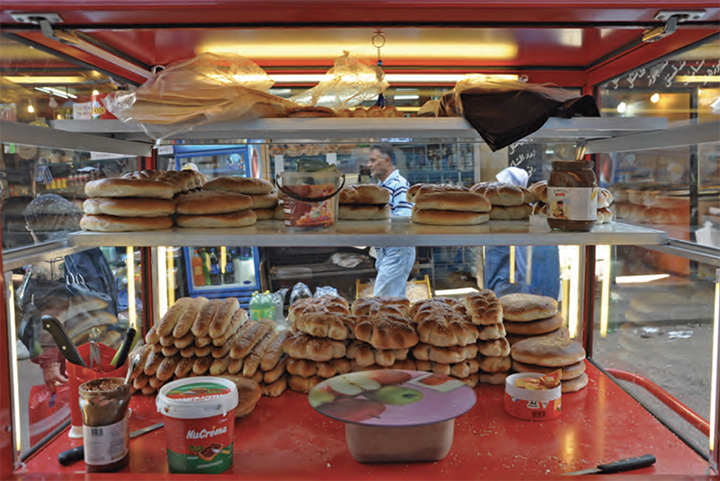
Pizza Hummus
This dish is neither pizza nor hummus, but a recreation of a meal I encountered in a Lebanese village. A local hummus chef made a prank by using white beans instead of chickpeas, topping it with his favourite ingredient: basturma (an Armenian cured meat). Customers didn’t realise it was a prank, and enjoyed the dish so much that it became a permanent fixture. It was named “Pizza Hummus” simply because the colour combination resembled a pizza. In Lebanon, it is served with log-shaped bread that’s commonly sold by vendors from pushcarts; for our event, I asked Panificio Ticozzi (a third-generation bakery near the Duomo) to recreate these specific loaves.
Treasures of Emerald Hills
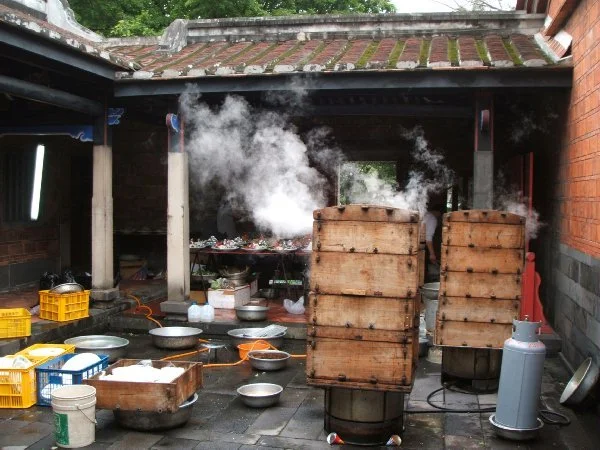
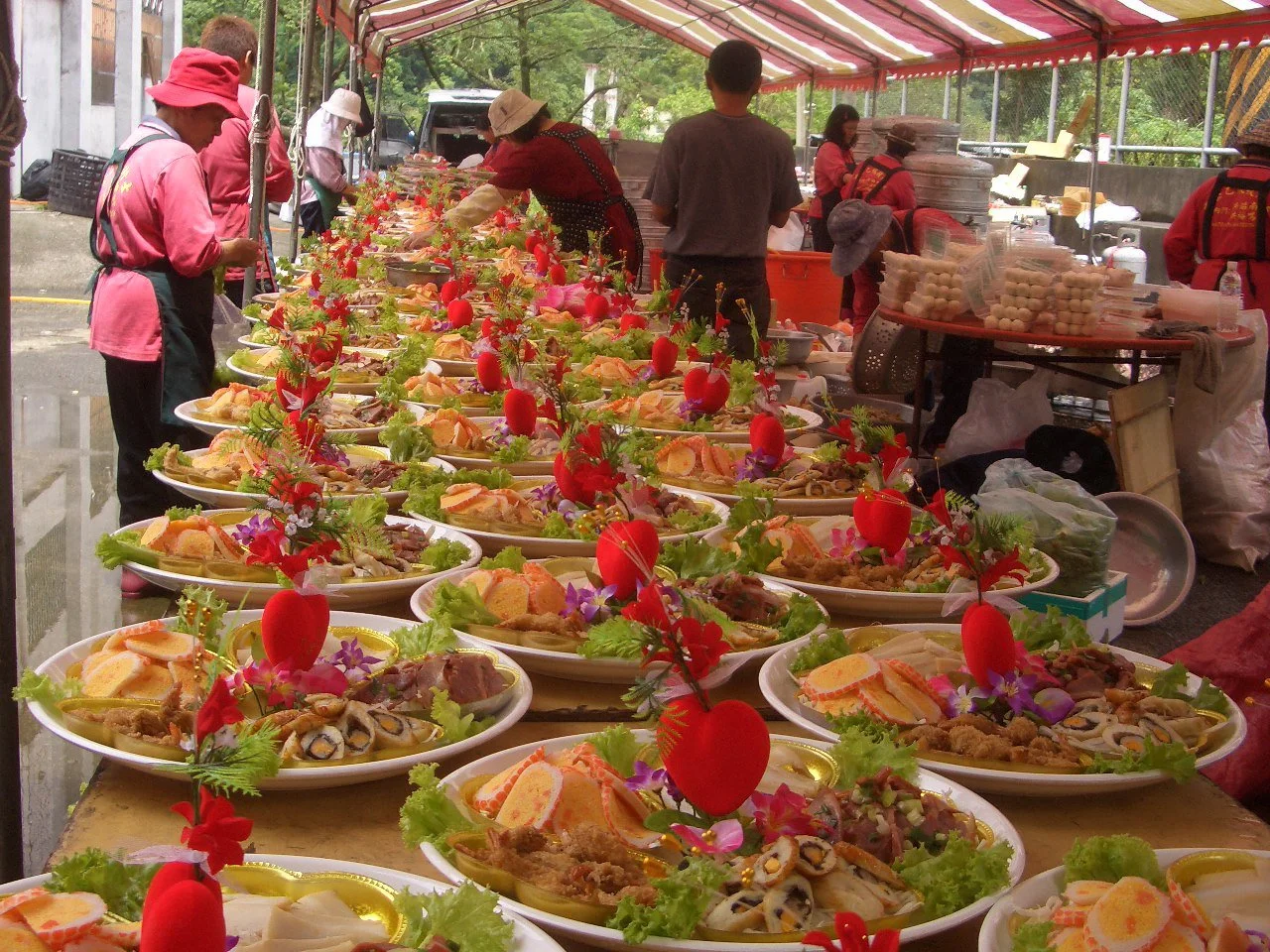
Commonly served at weddings in southern Taiwan, this dish’s name reflects the auspicious superstitions that shape many East Asian traditions. The “treasure” is pickled pumpkin (often called “golden melon” in Chinese), and the “emerald hill” is a broccoli purée. Legend suggests that the purée was born at a wedding where the broccoli was overcooked. Rather than wasting it, the chef mashed it and gave it a new, poetic name. Because the dish is too watery for chopsticks but too thick for a Chinese soup spoon, it is traditionally served in small saucers for slurping. Liquid Rituals created a vessel with textured crevices to emphasise the act of slurping (and licking, which should be normalised).
Flag Noodle
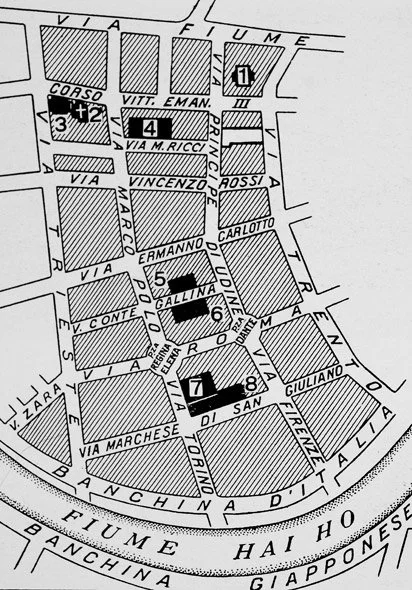
This dish traces its history back to the early 1900s when, following the Boxer Rebellion, Italy maintained concessions (basically colonies) in Tianjin, China. In the main concession, Italian restaurants near Piazza Regina Elena hired local Chinese staff. One of them served tortellini in brodo, but wartime resource scarcity forced the Chinese cooks to tweak the recipe. They substituted the pasta with "flag noodles" – an unleavened northern Chinese dough cut into rhombuses that resemble flags, and served in a simple chicken broth.
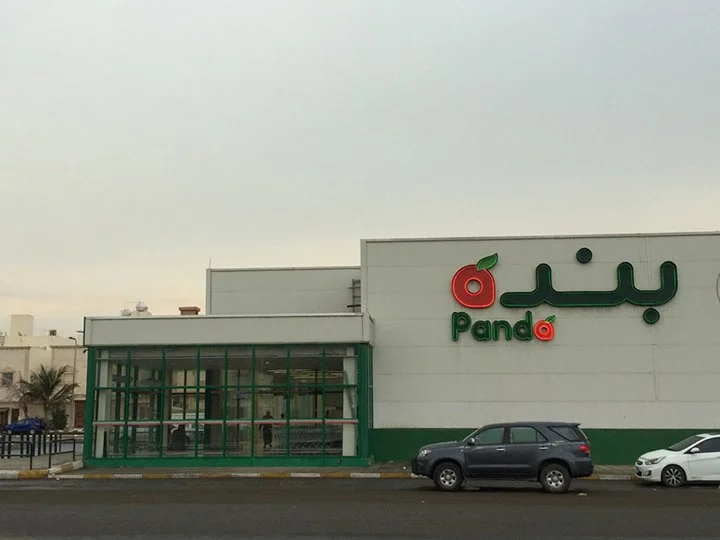
The Panda Meal
The main course originated from Panda, one of the largest supermarket chains in Saudi Arabia. Every year during Ramadan, the owners would prepare a meal for their employees to break their fast. Since most employees were from the Indian subcontinent, the menu featured both of subcontinental and Saudi cultures. The most known combination was a lentil stew and a simplified version of Saudi lamb rice, which used small chunks of meat rather than whole cuts with bone to make it more convenient to eat (and therefore return to work sooner). Meals in Saudi Arabia are traditionally eaten seated on the floor in rows, Liquid Rituals designed specific tableware to reflect the communal nature of this ritual.
The final item on the menu was a Saffron and Earl Grey tea, served in a set of jugs and cups that required a collective effort. Because the vessels lacked flat bottoms, a group of two to four people had to help one another pour and hold the cups to prevent spilling.
While saffron is considered a key ingredient of Milanese cuisine, 90% of the global supply is currently Iranian. Historically, however, the plant was first discovered in what is now Greece. Saffron does not grow from seeds and requires manual labour to plant and process, which means that its survival and dissemination relied on both suitable climate and human decision. Similarly, Earl Grey is seen as British, yet its distinct flavour comes from Bergamot oil, which is grown almost exclusively in Italy, yet it’s one of the most recognised British tea flavours.
Another "global" ingredient that has Italian roots is Broccoli. Its domestication and cultivation began over 2,000 years ago in modern-day Italy, after countless engineering it evolved from the wild cabbage plant into the Calabrese variety used in our second dish. The word itself comes from the Italian brocco, meaning sprout.
Then there are the, products with Protected Geographical Indication (PGI) or Protected Destination of Origin (PDO) status, supposedly ensuring originality and maintaining know-how, yet they are also less local than they seem. I couldn’t find basturma for the Pizza Hummus dish so used bresaola instead. Bresaola can only be called such if it is processed in Sondrio, yet over 90% of the raw beef used is actually imported from South America, as EU law only requires one stage of the process to take place in the region to earn the mark.
Furthermore, the hands that make the food are also increasingly international. More than half of the workforce producing Parmigiano Reggiano is from India, and roughly 20% of Italy’s pizzaioli are from Egypt. If the food they produce is sold as "Italian," shouldn't the food they eat while living here also be considered part of the Italian culinary landscape?
Even the classically Italian ingredient – tomato – is less Italian than we’d think. Until recently, many "Italian" tomato products were in fact reprocessed and repackaged imports from Xinjiang, China, which is where the flag noodle had originated from. Tomato production in Xinjiang was scaled up in the 1980s after Italian businessmen brought machinery and expertise to the region, after concluding that it had ideal climate for tomato growth at a much lower cost than in Italy. Similarly, the buffalo used for mozzarella likely originated in India, and the cows for Parmigiano Reggiano came from Hungary. They have both cross bred with different varieties and adapted to local geography to be considered Italian, enabling the production and claim to a new identity through contextualised narratives.
-
Through the menu, I told stories that linked each dish to certain existing cultures to make them credible. But what if those stories were fabricated from bits and pieces of facts? The truth is, I’ve created these dishes specifically for this event during Milan Design Week, under the theme Hello Darkness, to reflect the current realities of Milan using only ingredients bought within the city. Given such a localised context, could these be considered Milanese dishes?
In today’s hyper-linked world, where people, climate, goods, and information all move faster and more frequent than before, food can no longer be used for singular or static claims and narratives. Perhaps it is time to acknowledge the "darkness" of traditions, where multiple places can share similar elements to develop new and translocal identities. Milanese food is not merely about recipes from the 18th century, it is the pot where everything currently available is cooked together. You may taste the individual ingredients, smell the blended aromas, and see a rich stew that can’t be cooked anywhere else.
References
Anesi, Cecilia. “Pulp Fiction: Asda’s “Made in Italy” Tomato Puree Hails from China.” The Guardian, The Guardian, 27 Feb. 2013, www.theguardian.com/world/2013/feb/27/asda-italy-tomato-puree-china.
CNN. “Why Immigrants Are Taking Traditional Italian Jobs.” YouTube, 20 May 2013, www.youtube.com/watch?v=pIgcGX_-k0o.
European Commission. “Geographical Indications and Quality Schemes Explained.” Agriculture.ec.europa.eu, 2018, agriculture.ec.europa.eu/farming/geographical-indications-and-quality-schemes/geographical-indications-and-quality-schemes-explained_en.
Giorgio dell’Orefice. “Bresaola’s Strategy against Tariffs: What Lollobrigida’s Proposal Consists Of.” Il Sole 24 ORE, 8 July 2025, en.ilsole24ore.com/art/bresaola-strategy-against-tariffs-what-is-lollobrigidas-proposal-AHEYbIbB?refresh_ce=1.
Mitzman, Dany. “The Sikhs Who Saved Parmesan.” BBC News, 24 June 2015, www.bbc.com/news/magazine-33149580.
Redazione Le Iene. “TOFFA: Quando Il Pomodoro Cinese Diventa Made in Italy.” Le Iene, 27 Sept. 2015, www.iene.mediaset.it/video/toffa-quando-il-pomodoro-cinese-diventa-made-in-italy_68936.shtml.
“Saffron | Description, History, & Uses.” Encyclopedia Britannica, www.britannica.com/topic/saffron.
“The History of Broccoli: From the Etruscan Period to Now.” La Cucina Italiana, 13 Nov. 2020, www.lacucinaitaliana.com/trends/healthy-food/history-broccoli-etruscans-today.
魏承亿、冯波. “二师铁门关市制酱番茄进入全面生产加工季- 兵团文明网.” Btwmw.net, 2022, www.btwmw.net/content/content_1649416.html.
張灝. 幽暗意識與民主傳統. 聯經出版事業股份有限公司, 4 May 1989.