GOING DUTCH
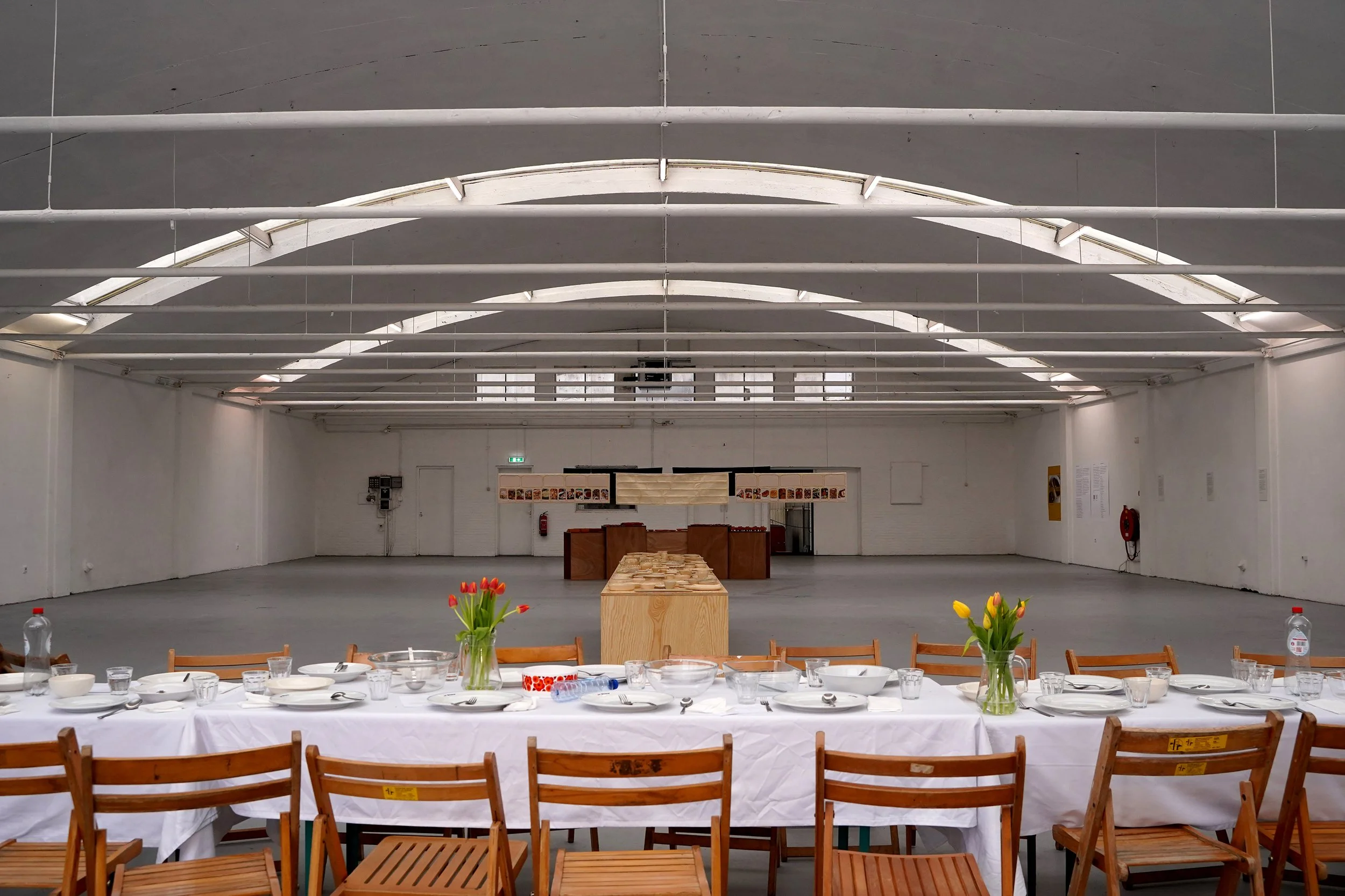
What is Dutch food?
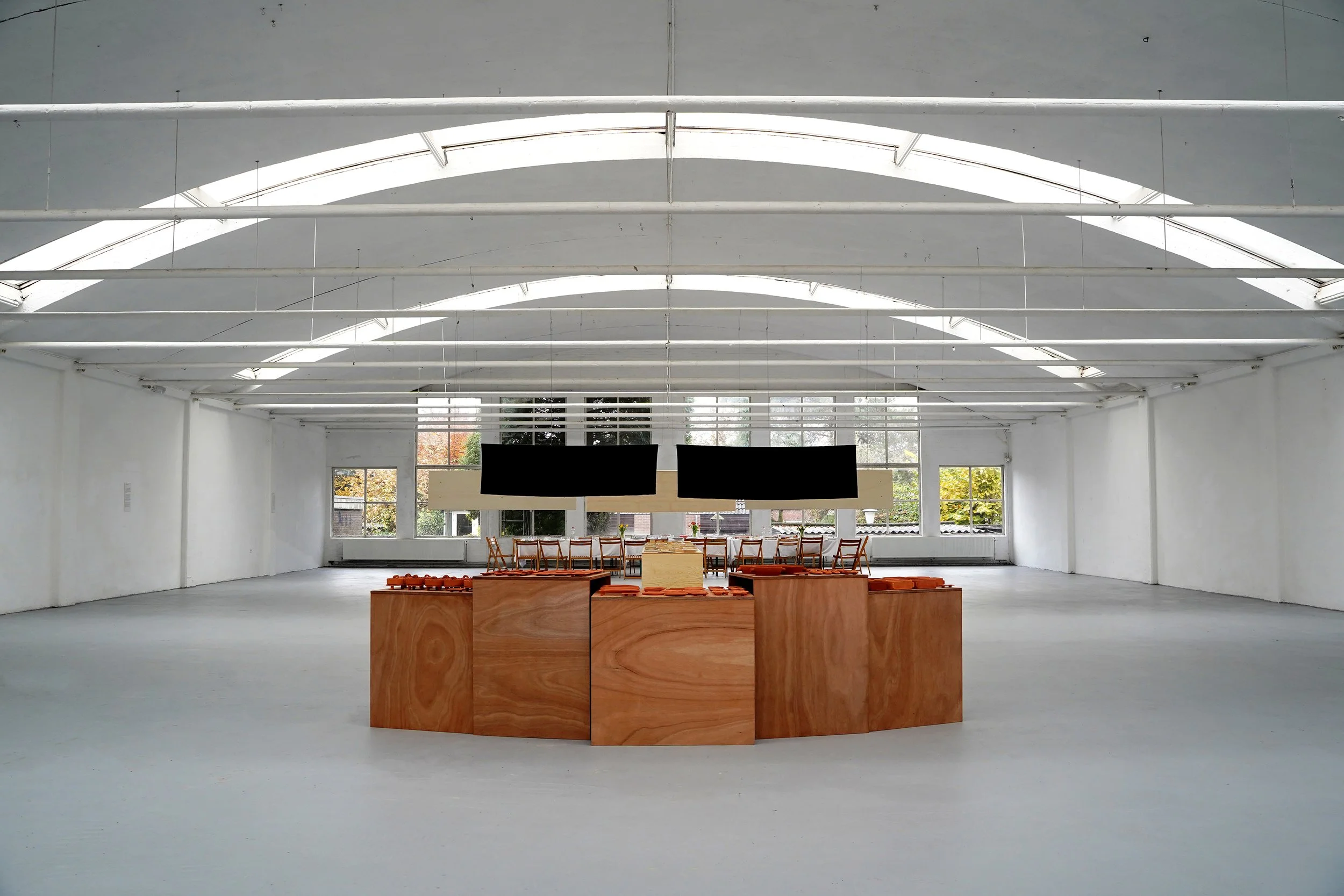
This is a question that Anas Chao has been asking himself since moving to the Netherlands in 2021. It led him on an 18-month journey of workshops, shared meals, interviews, and archival research, resulting in the exhibition Going Dutch.
Bearing the privileges and consequences of its colonial past, the Netherlands is now home to a diverse population, yet notions of Dutchness remain divided. Going Dutch examines how identities in such a complex society are negotiated through culinary practices. Beyond popular and commercialised traditional dishes, what, how, and why people in the Netherlands eat everyday may present a more accurate reality of Dutch cuisine.
The Netherlands has long influenced global cuisines through its historical dominance in the innovation, production, and distribution of agricultural goods. At the same time, migrants that sustain such dominance continuously reshape the Dutch food scene, as they adapt their traditional home dishes to the ingredients locally available in the Netherlands. Within this ongoing recycling of cultures, how should the boundary of Dutch cuisine be defined? Should there be nationalistic boundaries to food? The exhibition showcases textile and clay installations, each addressing different facets of the research: traditions and stereotypes, history and context, and the reality of contemporary everyday food.
The project is titled Going Dutch, referencing the term used to describe each person paying their own expenses in a group activity. This is to reflect the reality of home production in an individualistic context, regardless of a person’s inherited sense of belonging and nostalgic attachments. More importantly, the title literally denotes an entity—a person or a dish—moving closer to achieving Dutchness.
DUTCH BUFFET
Clay
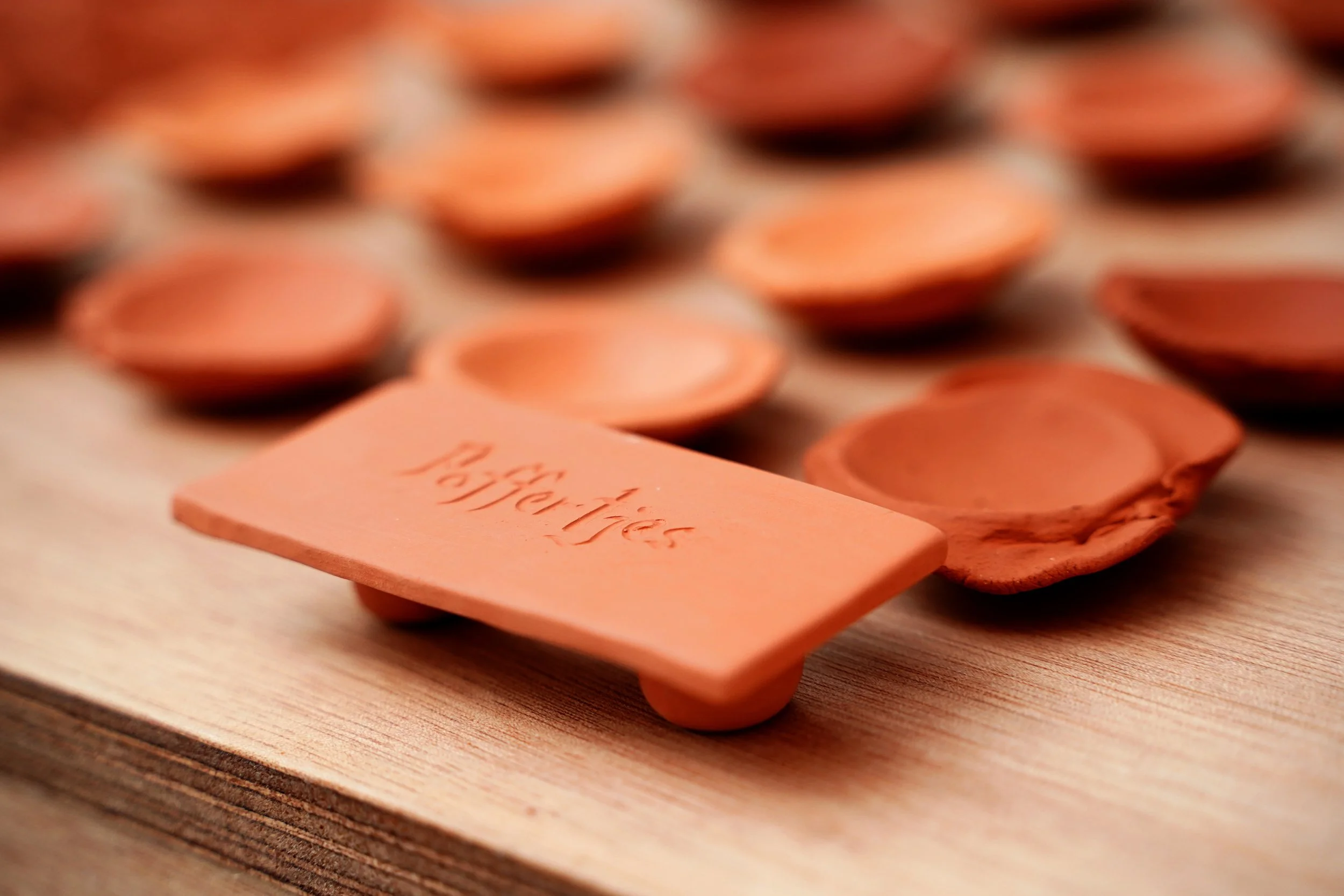
National cuisines often use traditions and authenticity to reinforce and justify narratives of nationhood, albeit catering to select groups of the population. With time, they become stories of a distant past—nostalgic memories that are not experienced by people who sustain such traditions. To maintain such a facade, national dishes are commercialised and industrialised for accessible consumption, enabling stories of national dishes and identities to be continuously passed on.
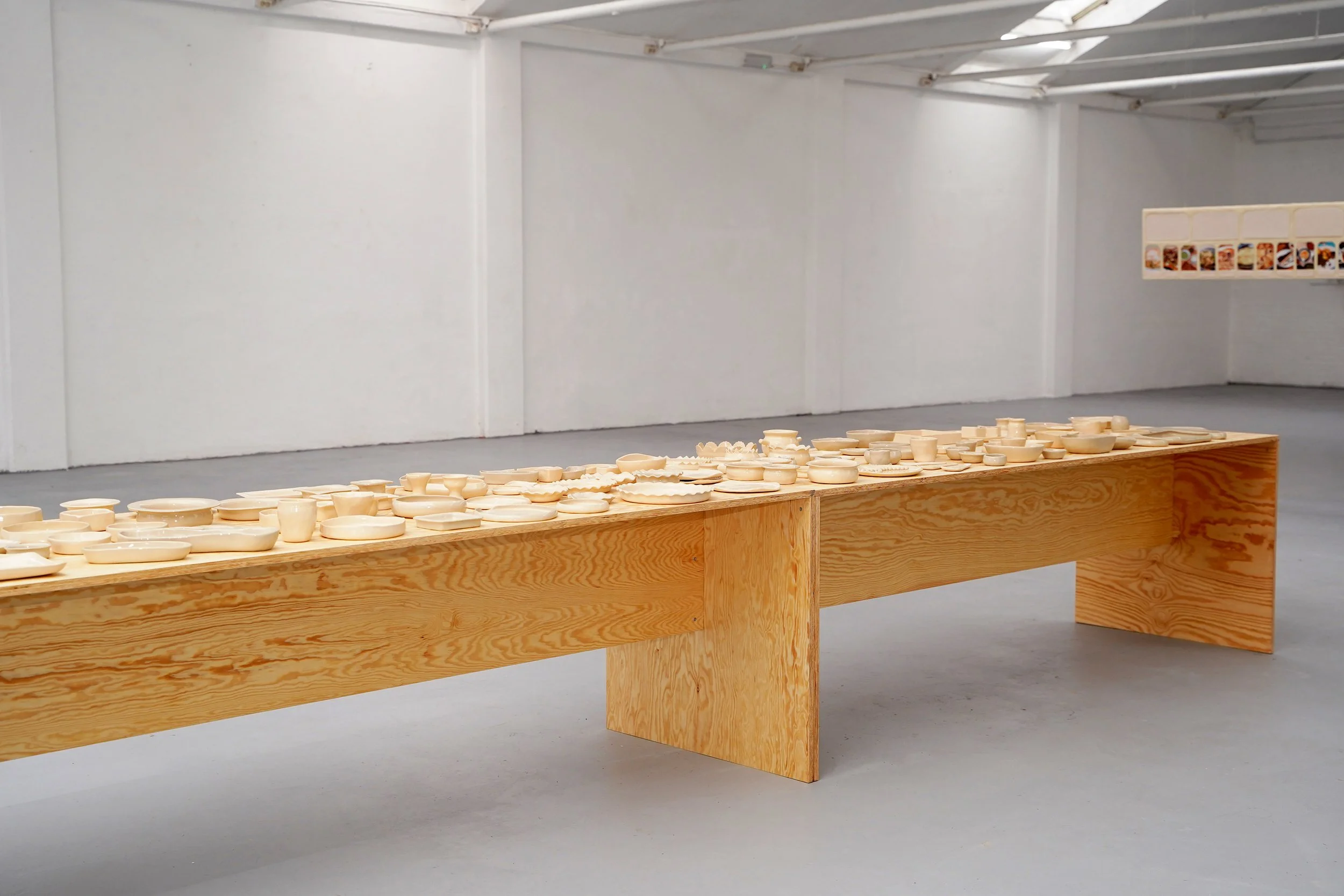
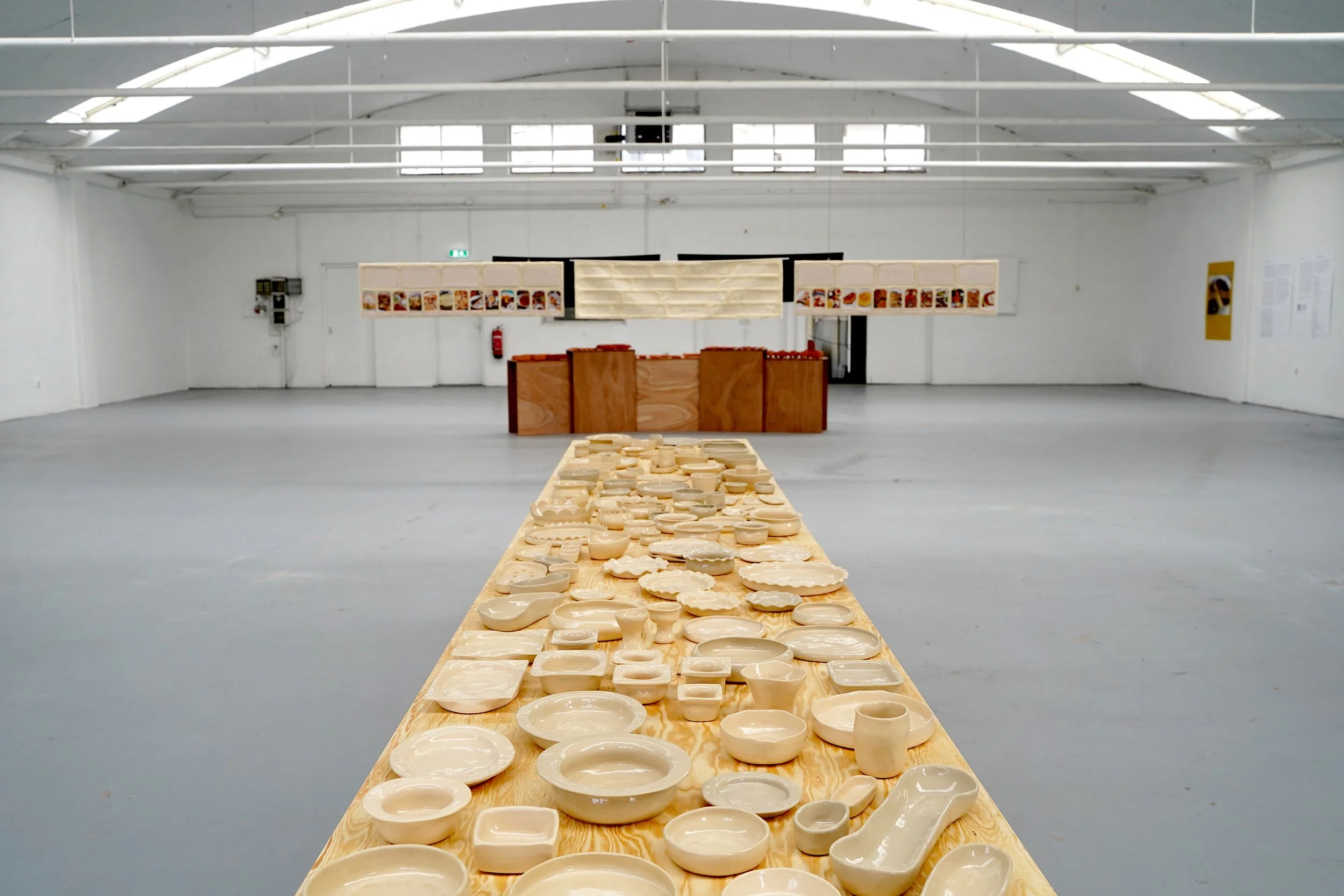
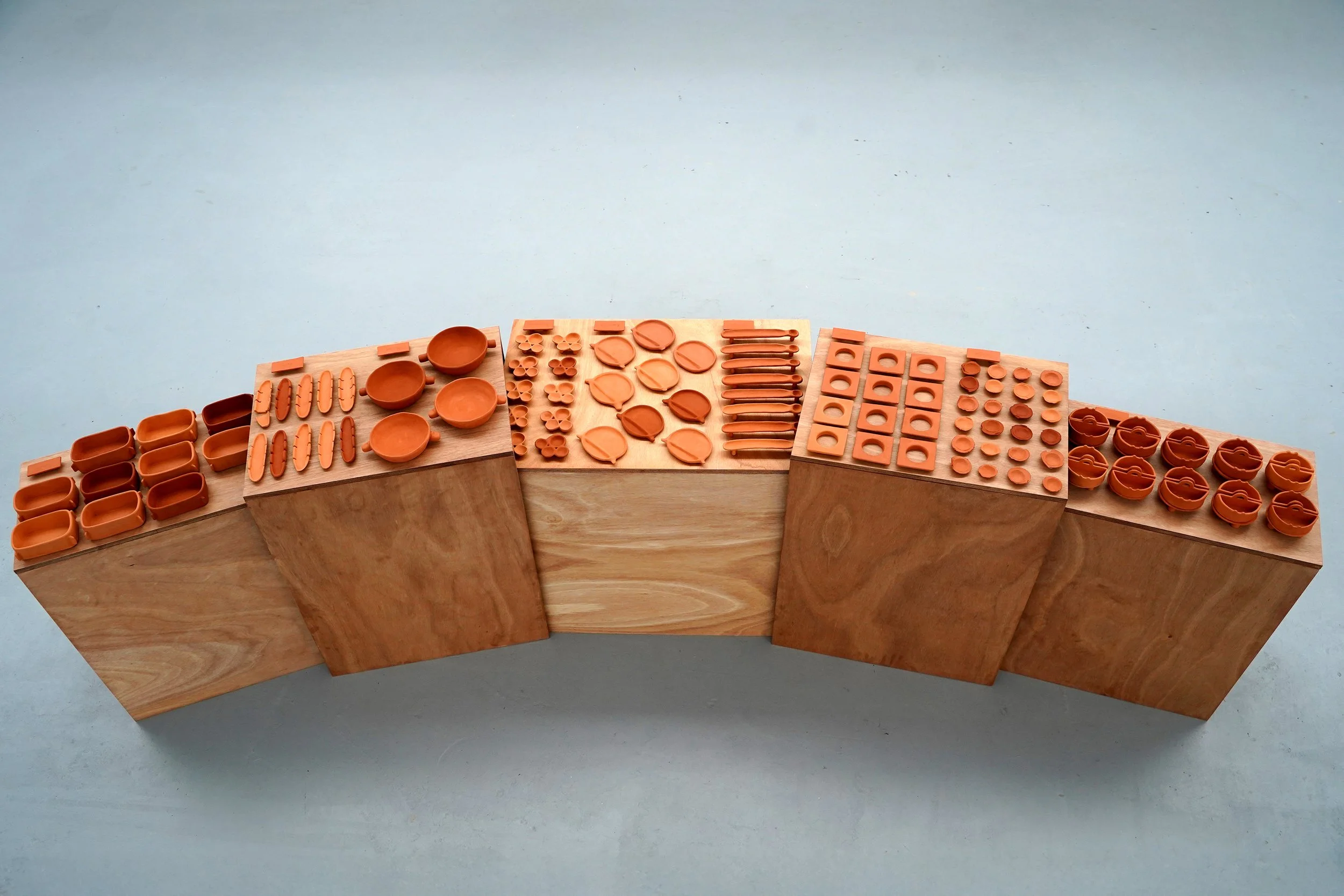
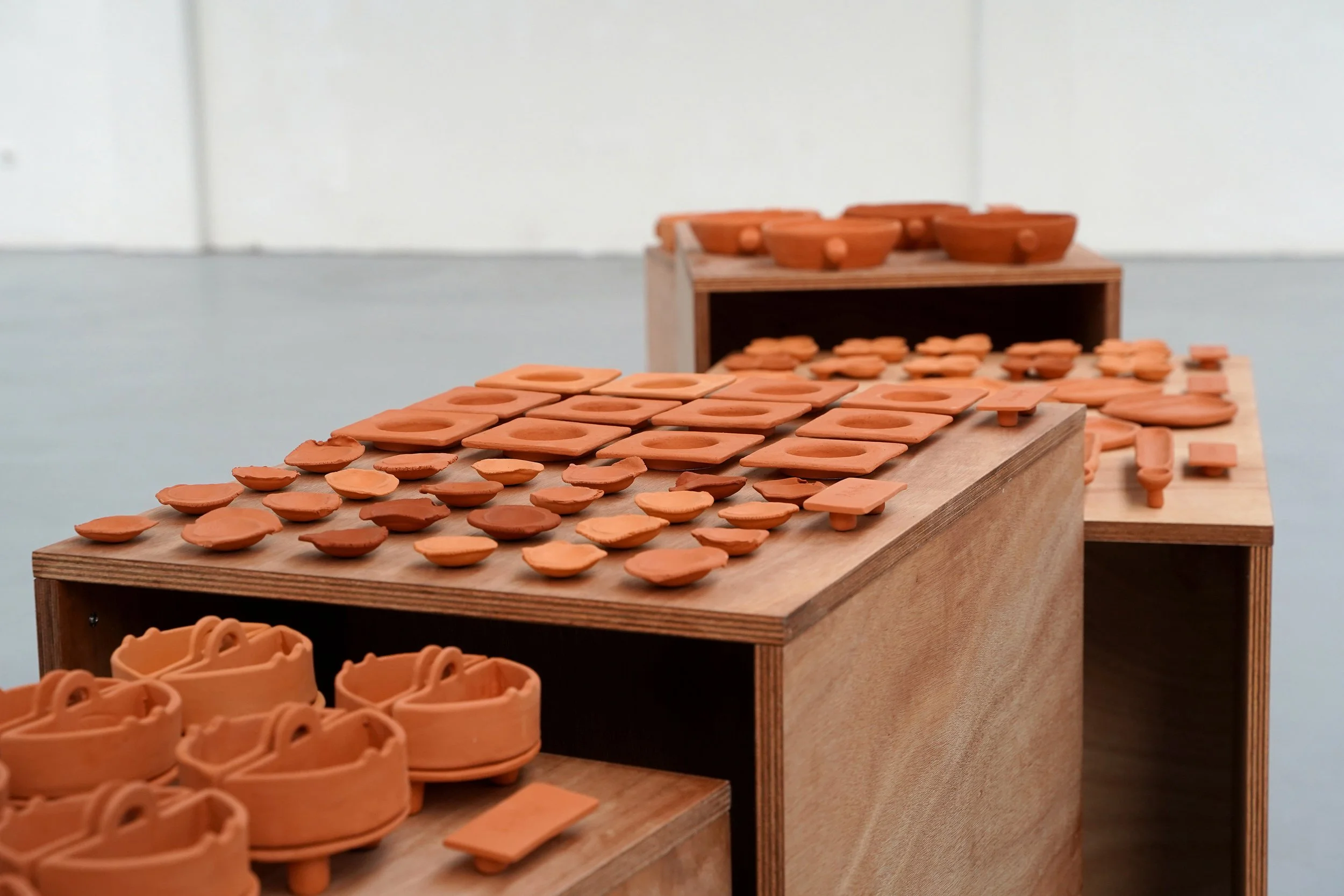
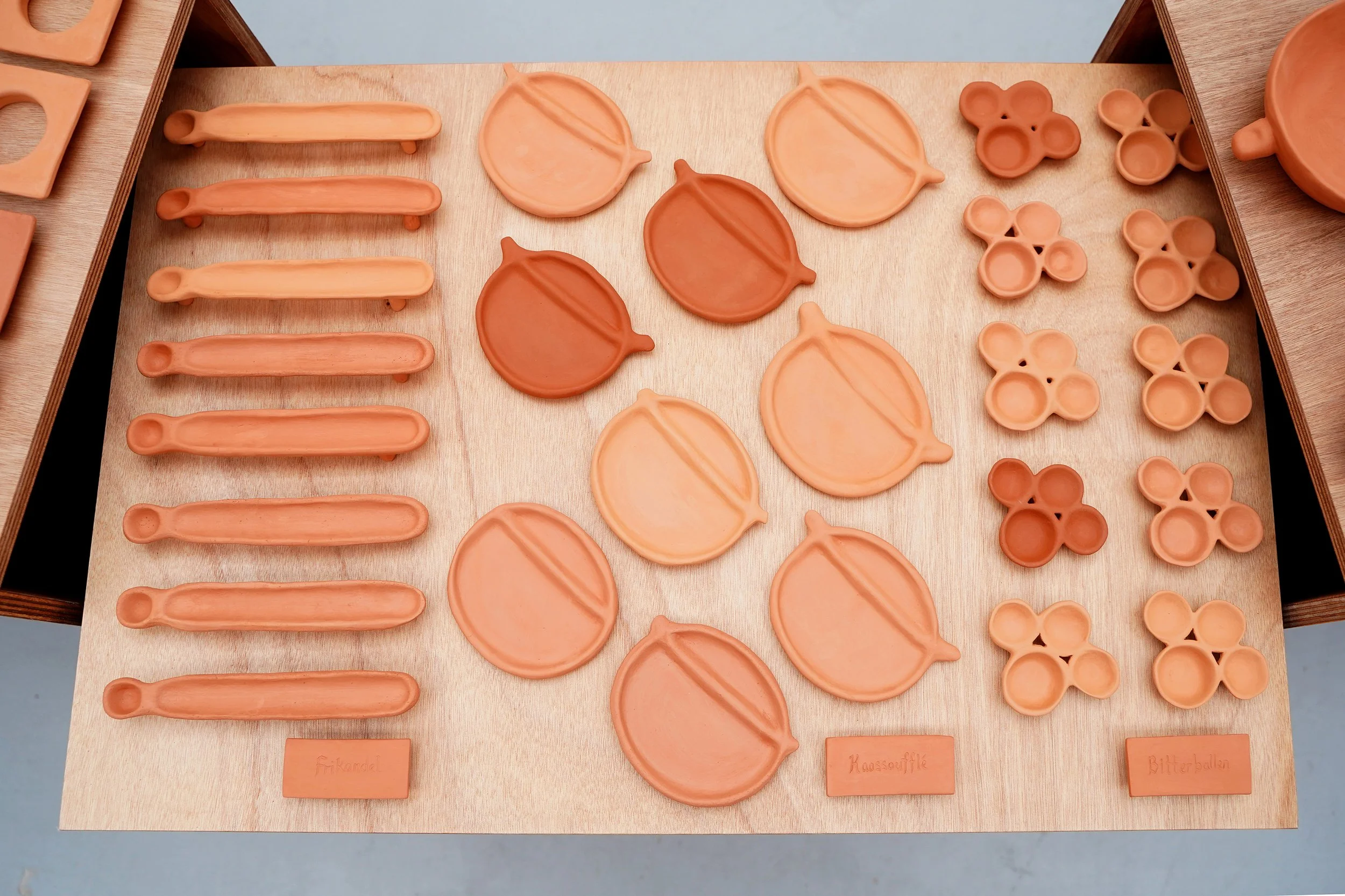
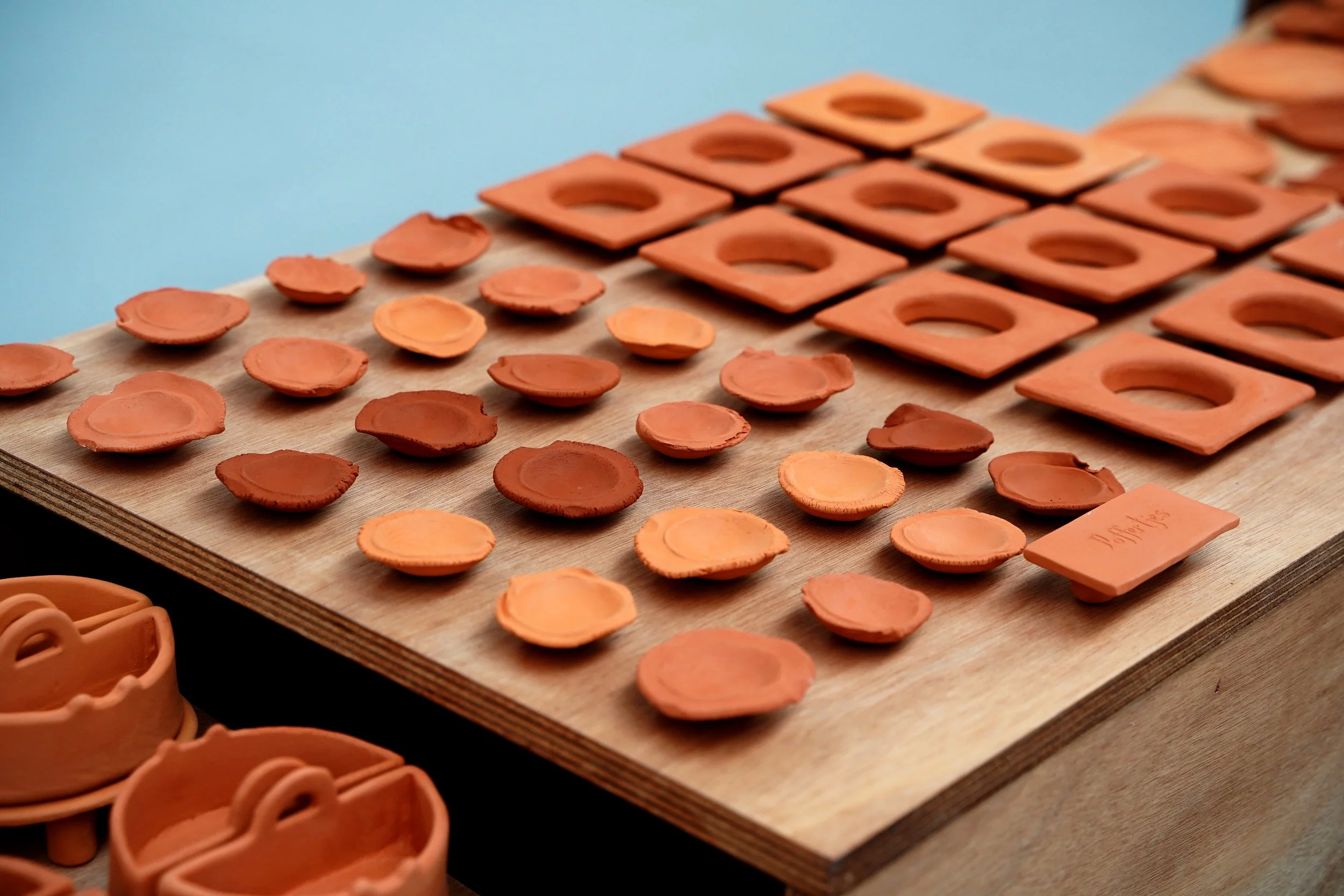
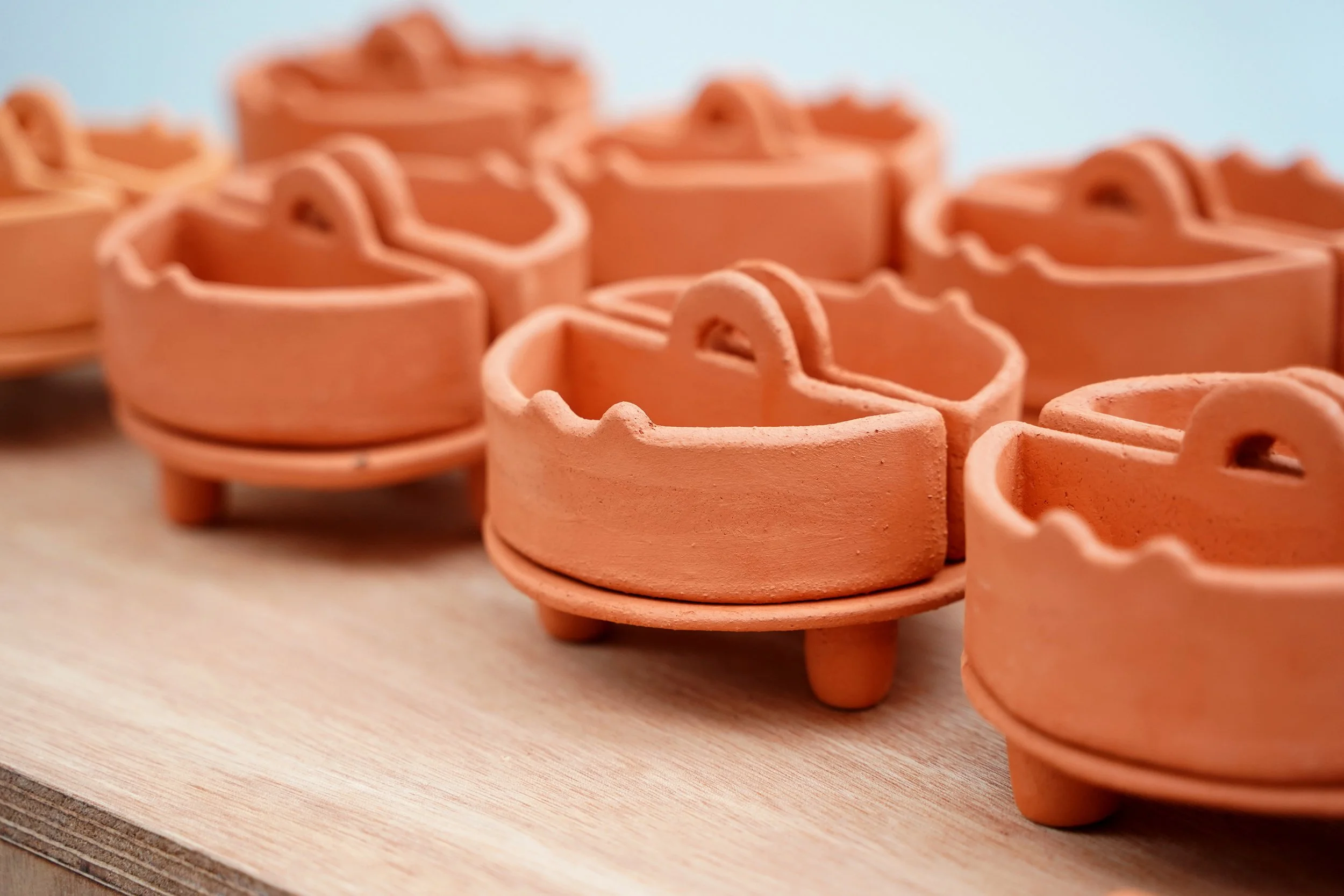
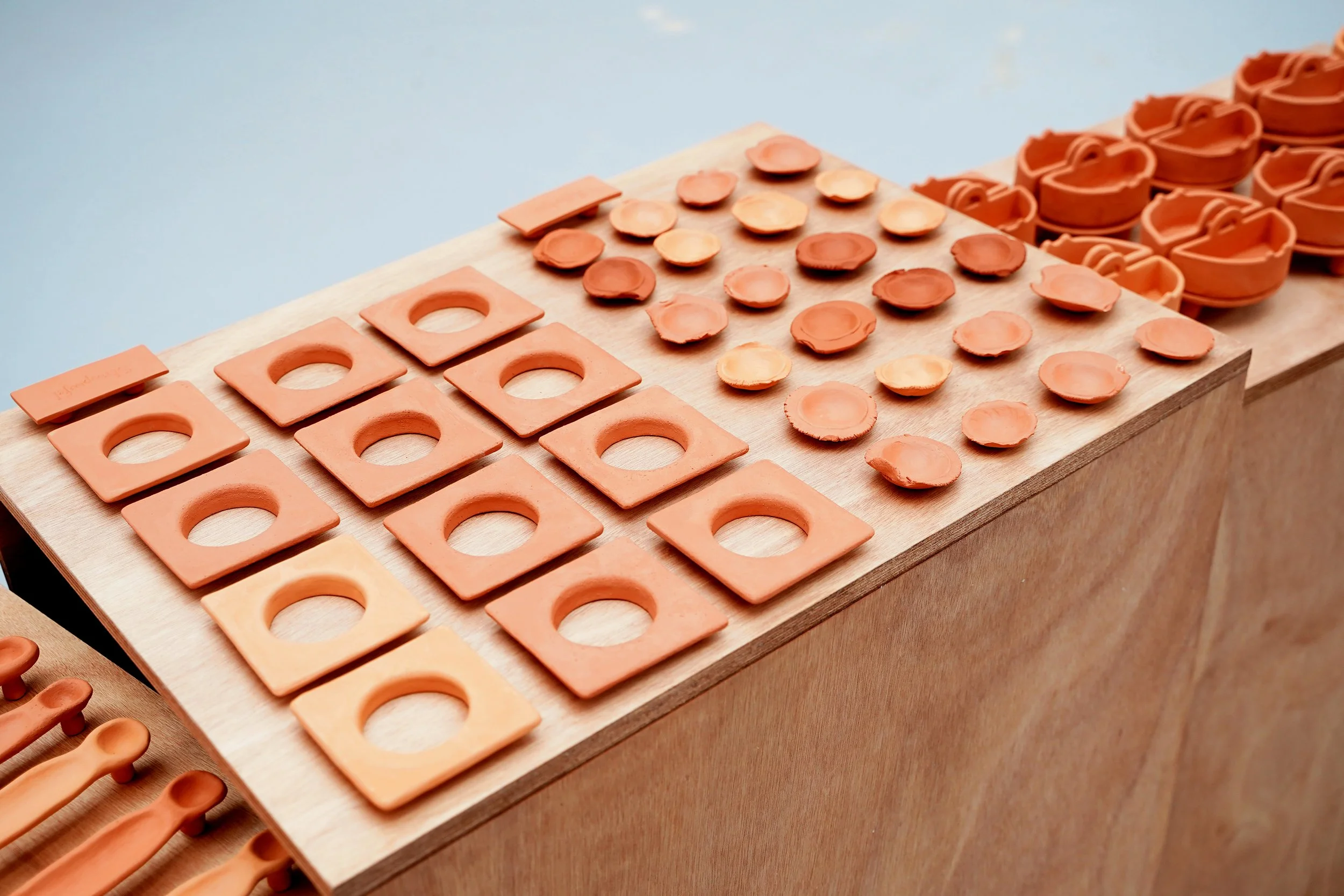
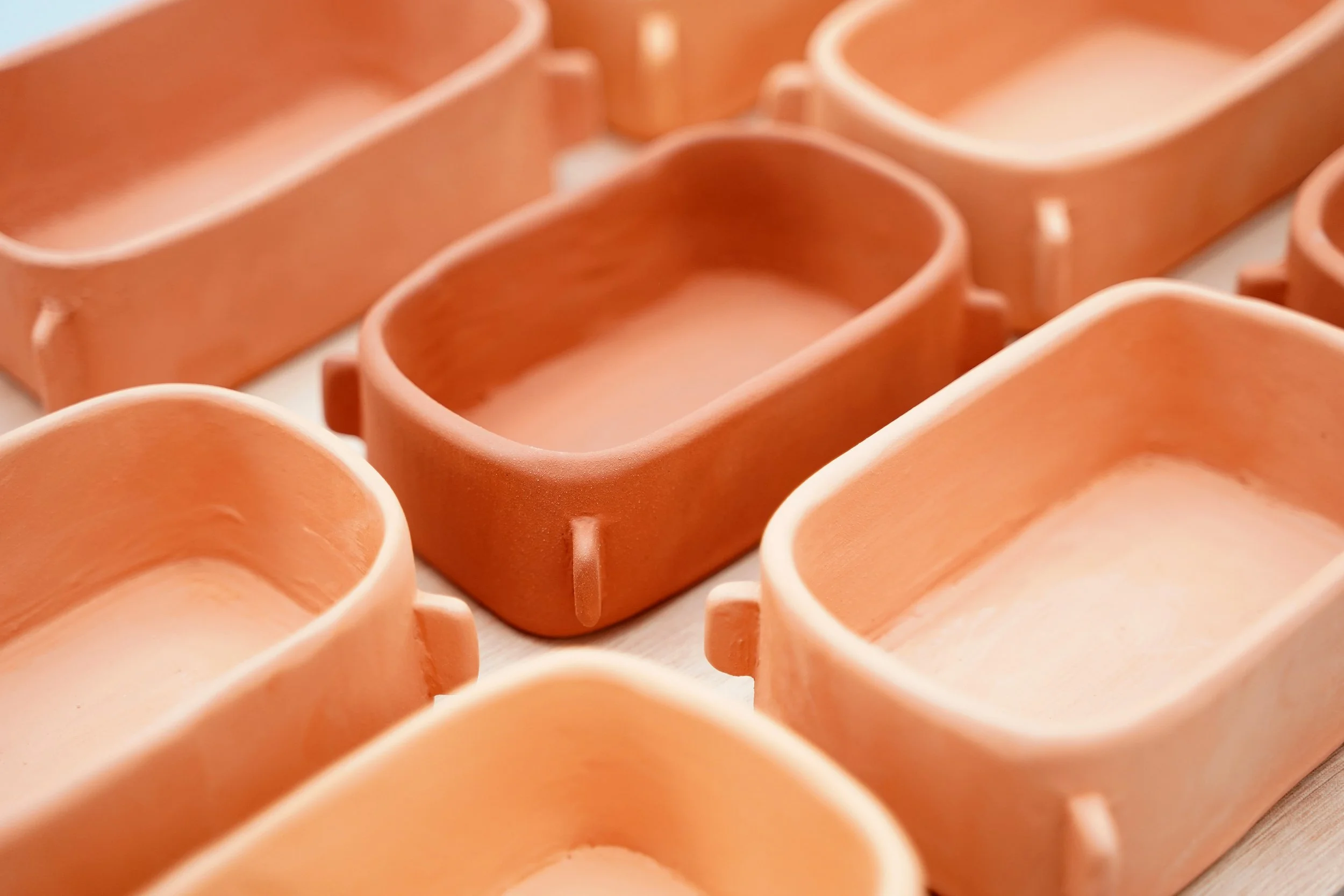
Dutch Buffet is a collection of reinterpreted vessels of nine classic items of Dutch cuisine, each with its own specific shape and features. Some are based on historical facts, while others stem from Anas's imagination, presenting the work as future artefacts. By blurring the boundary between reality and fabrication, this work not only questions who gets the right to speak about national food, but also highlights the selective nature of building a national identity. Just like a buffet, take what you want and leave the rest.
EET SMAKELIJK
Wool, velvet
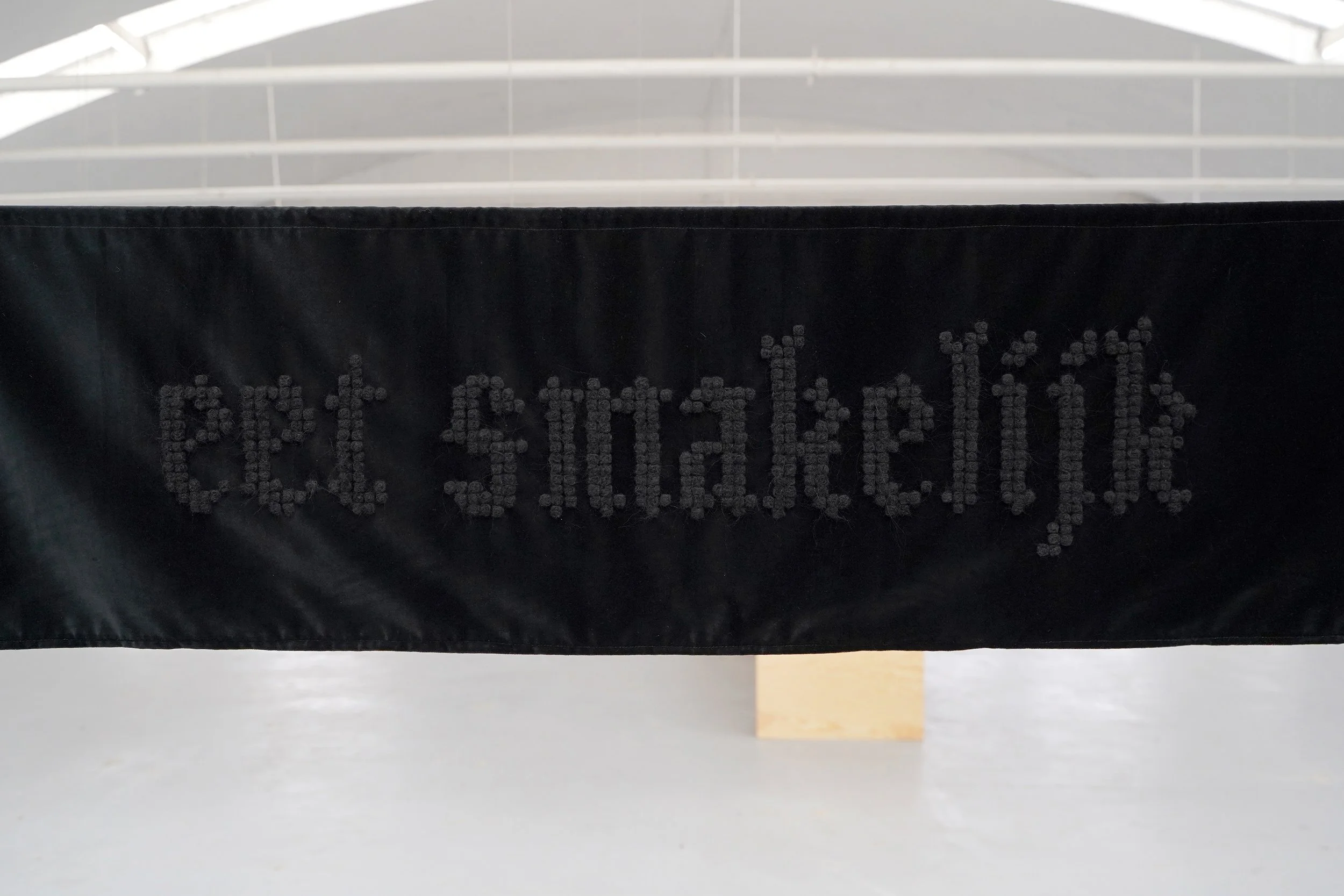
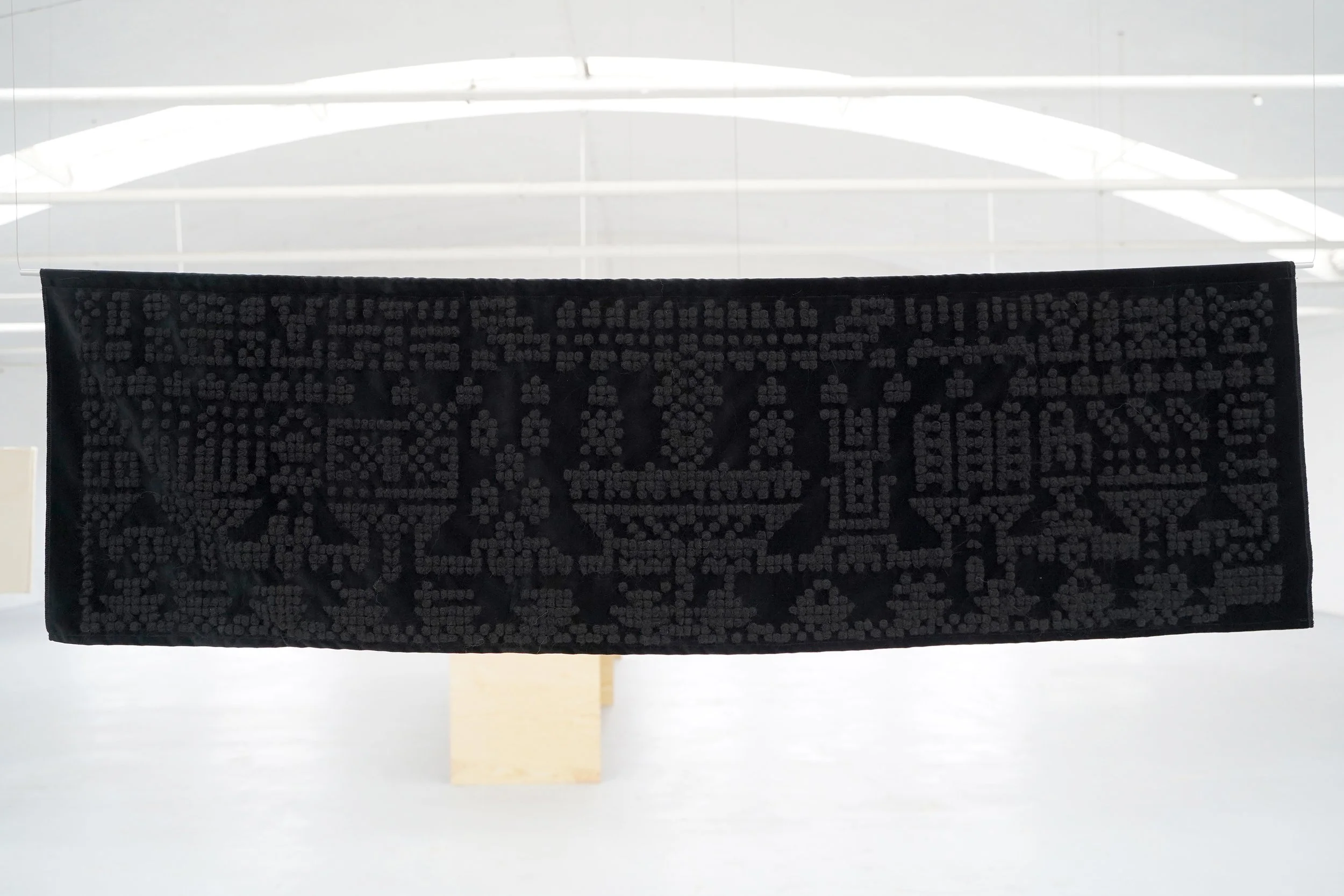
Narratives that legitimise food as part of national cuisine, in their essence, are storytelling through historical accounts that may be factual or altered realities. Who records history? What is kept in archives? Where are such materials collected? How is information understood? These are all variables that lead history to be highly subjective, enabling personal contexts and collective agendas to overpower facts.
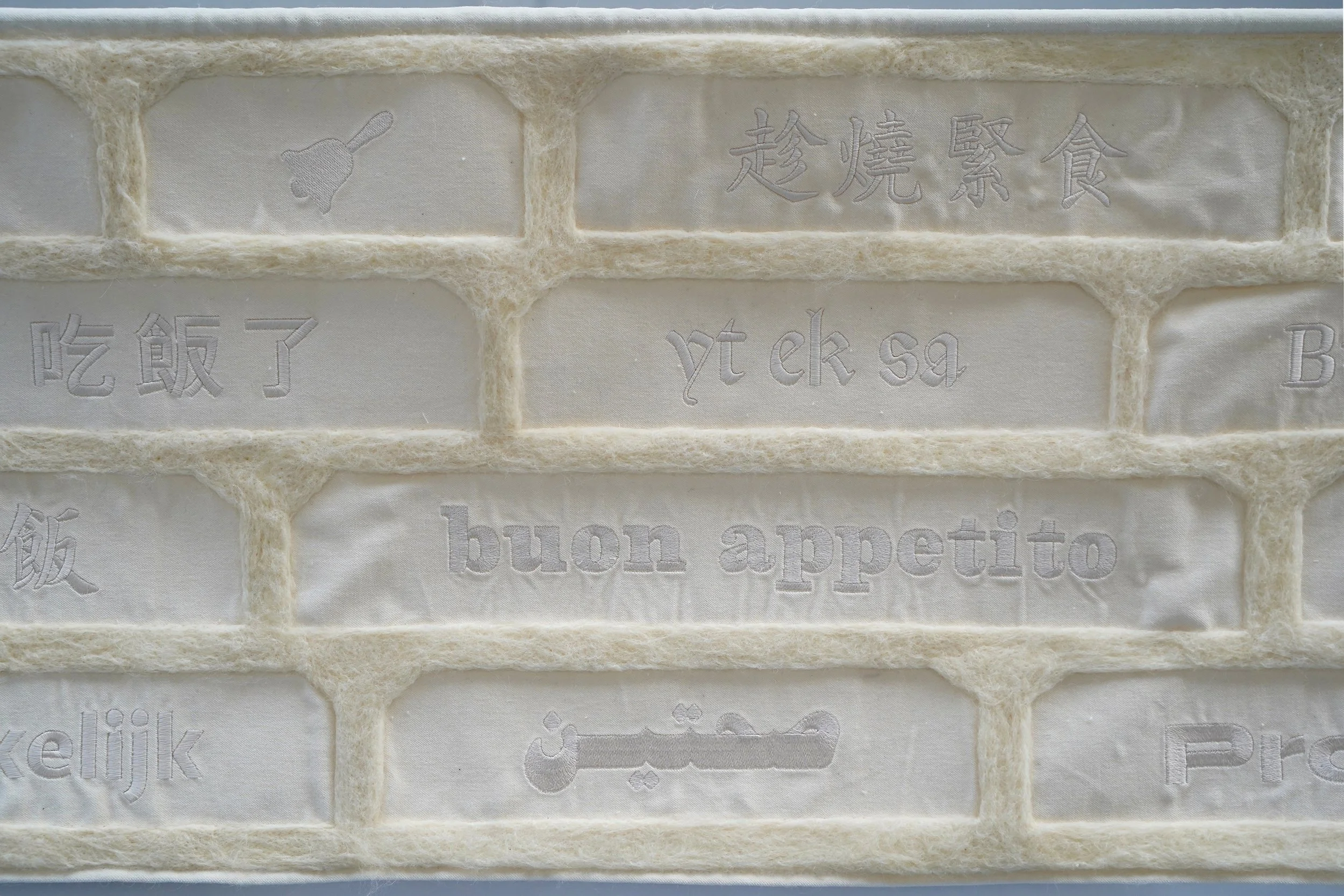
Anas studied archival materials from the internet and institutions, then compiled the evolution of Dutch culinary culture from the 1900s to the present. This was then translated into an abstract pattern and needle-felted onto velvet. While history is embedded into each square, its ambiguous visual opens up room for interpretation based on the viewers' subjective understanding.
Finding Smakelijk
Wool, velvet, clay, paper
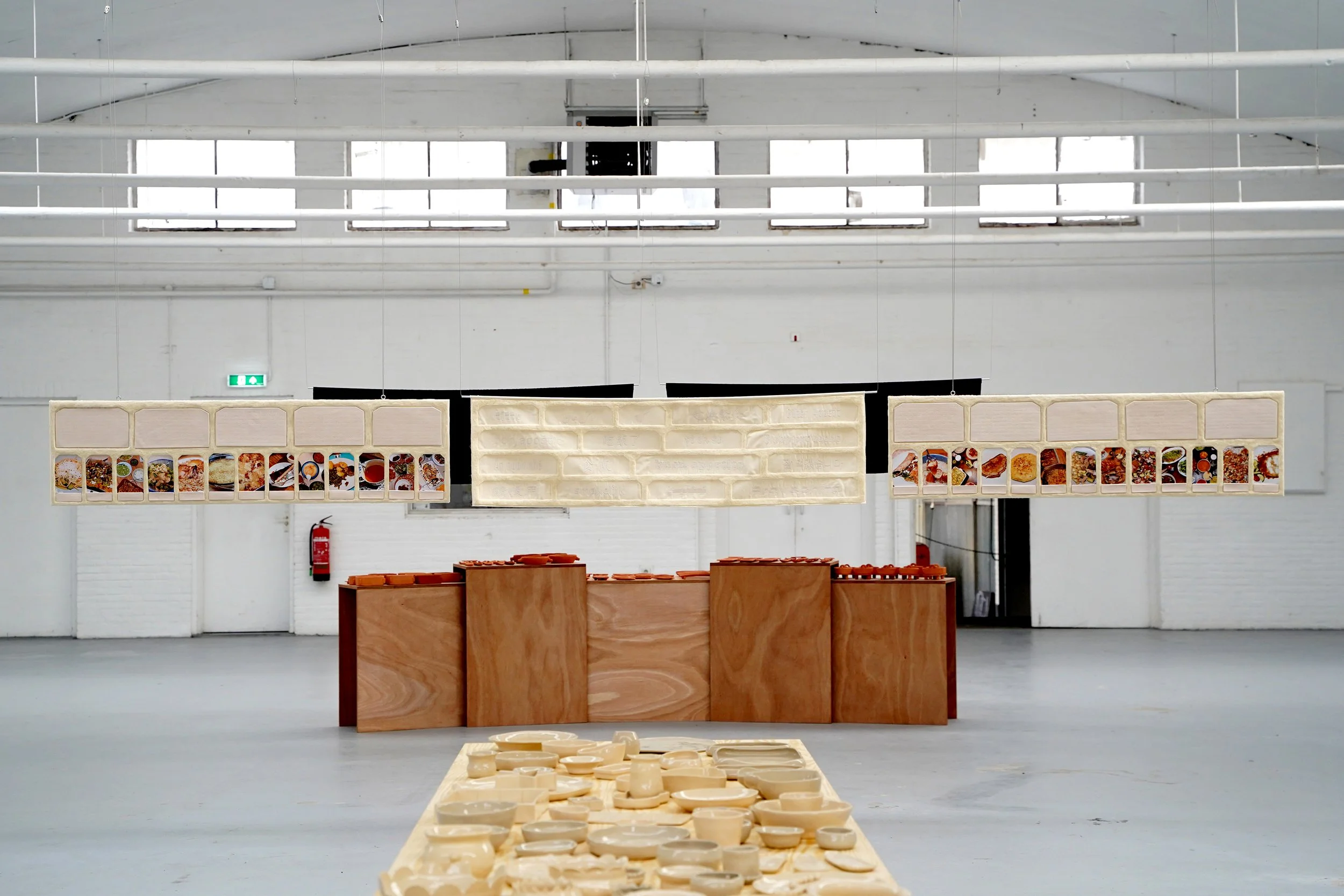
History provides one version of how Dutch food has evolved, but lacks input from more recent changes, which have been happening at increasing speed and scale thanks to globalisation.
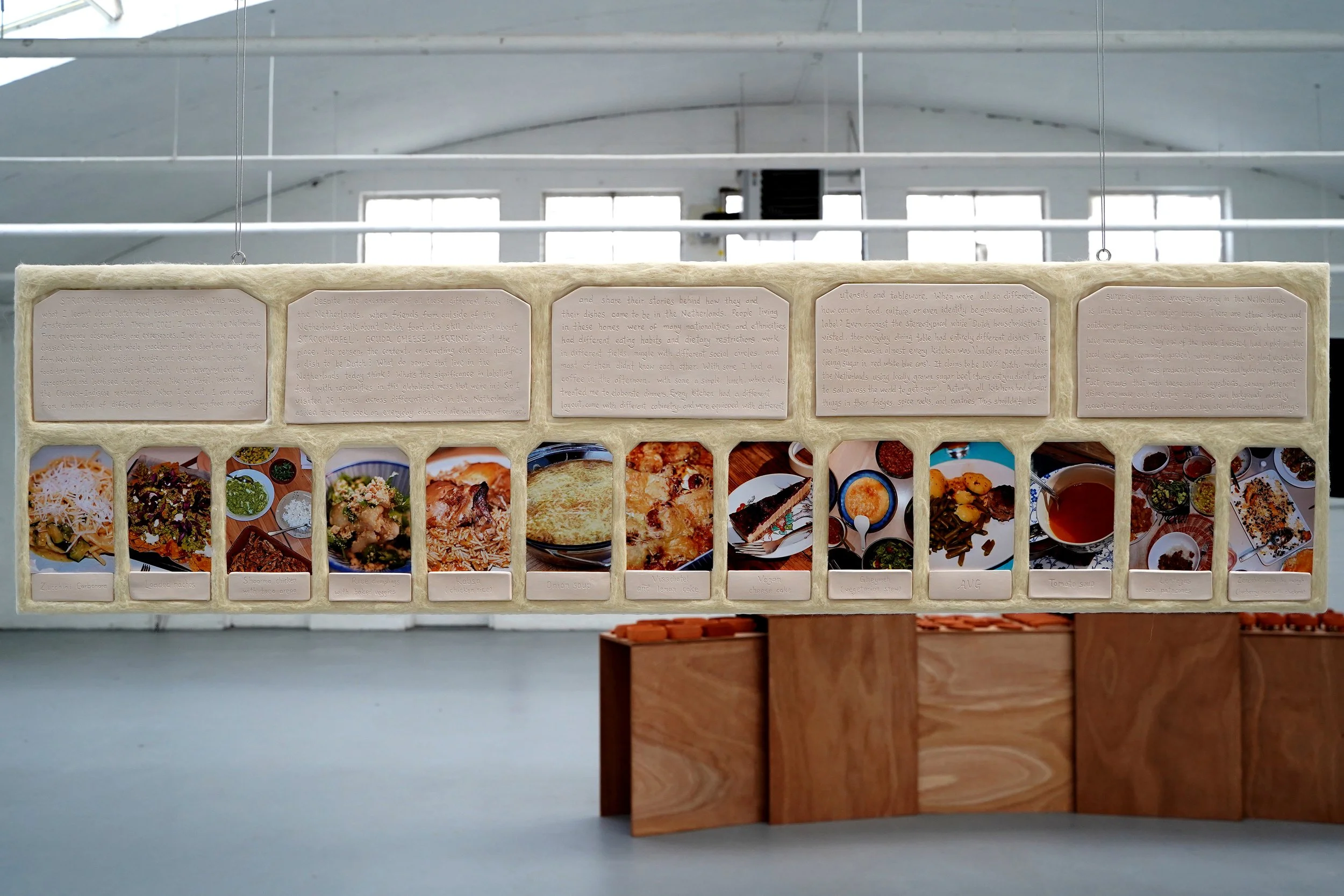
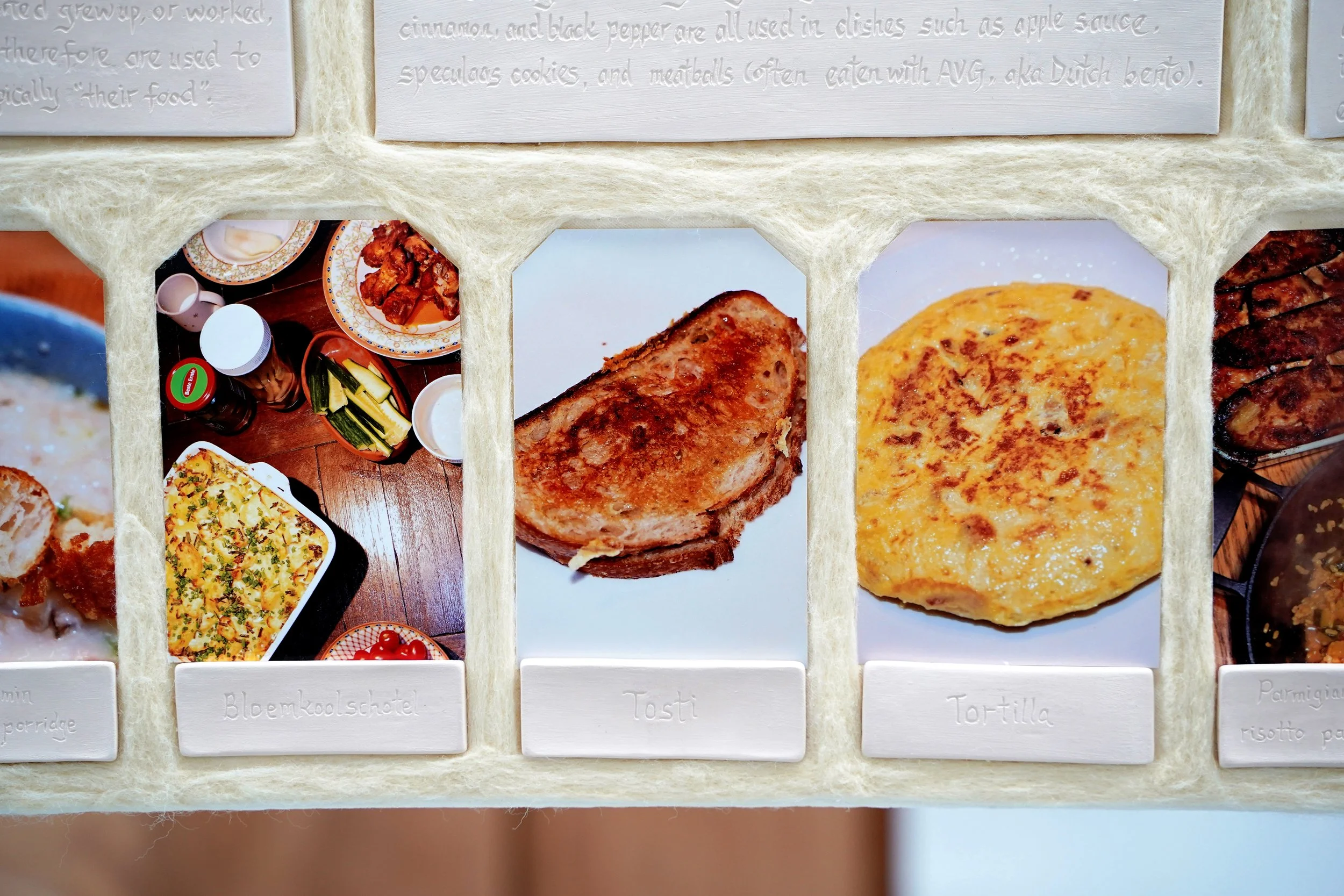
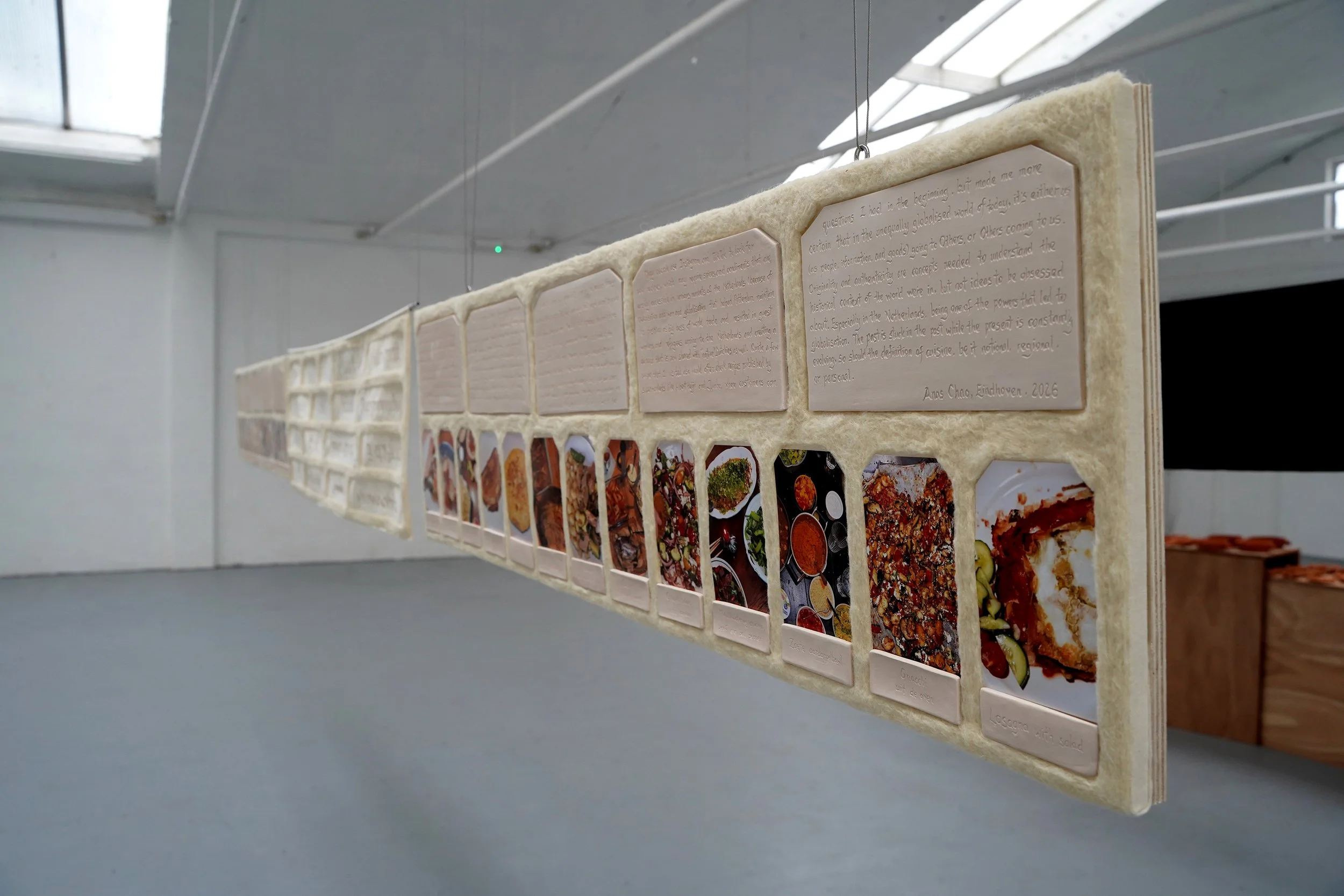
To understand the current reality of Dutch food culture, Anas conducted field research by visiting 26 home kitchens in the Netherlands. The process is narrated in Finding Smakelijk as an internal monologue, presented through concrete text and images. This leaves less room for personal interpretation by the viewers, yet results in a subjective and biased archive that may become the very historical material used to justify national foods in the future.
Are we just stuck in this loop?
DUTCH DISHES
Clay
With the role played by the Netherlands in global trade and geopolitics, Dutch society has become increasingly complex. Thus, Dutchness—be it food, people, or culture—can no longer be defined through one singular narrative.
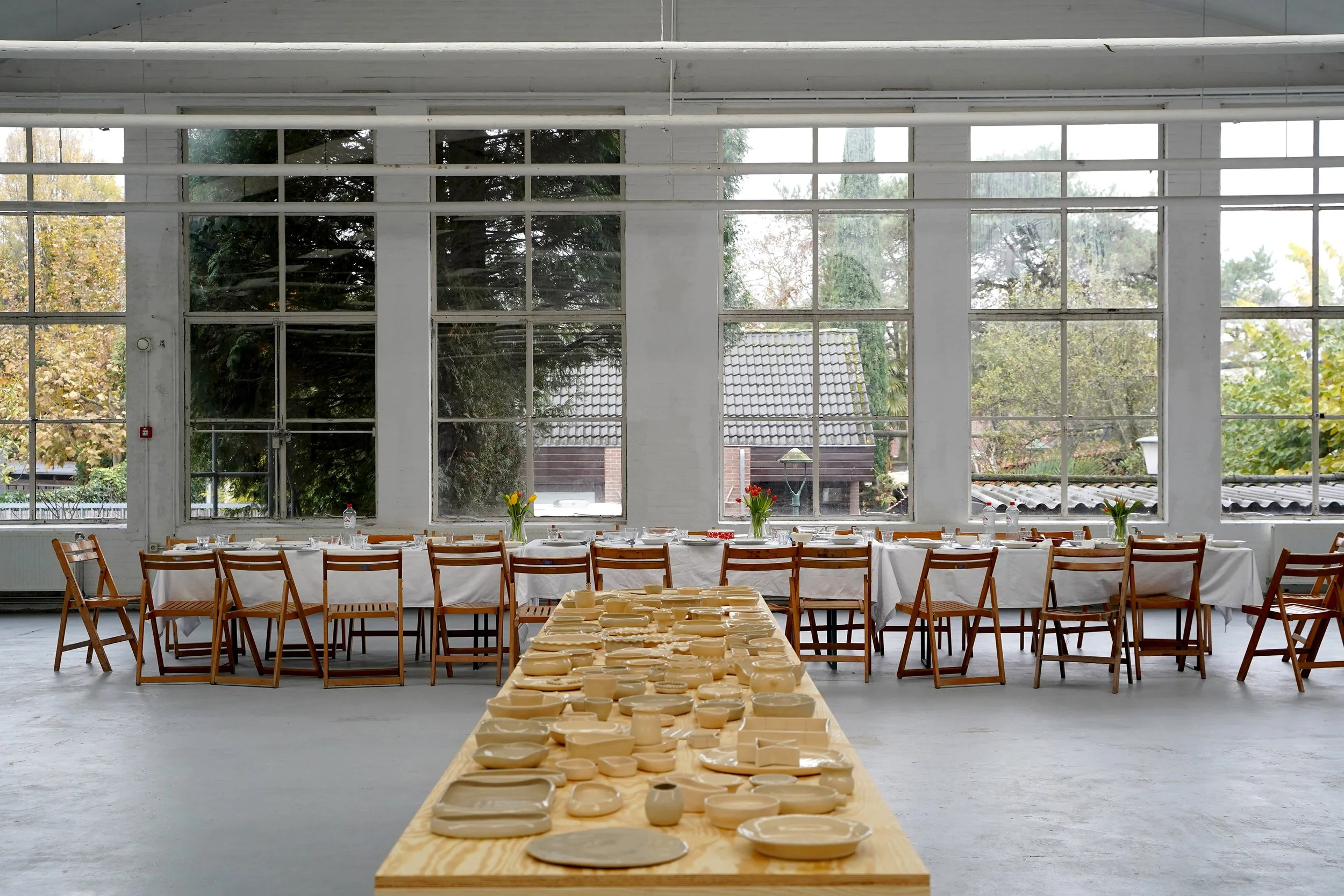
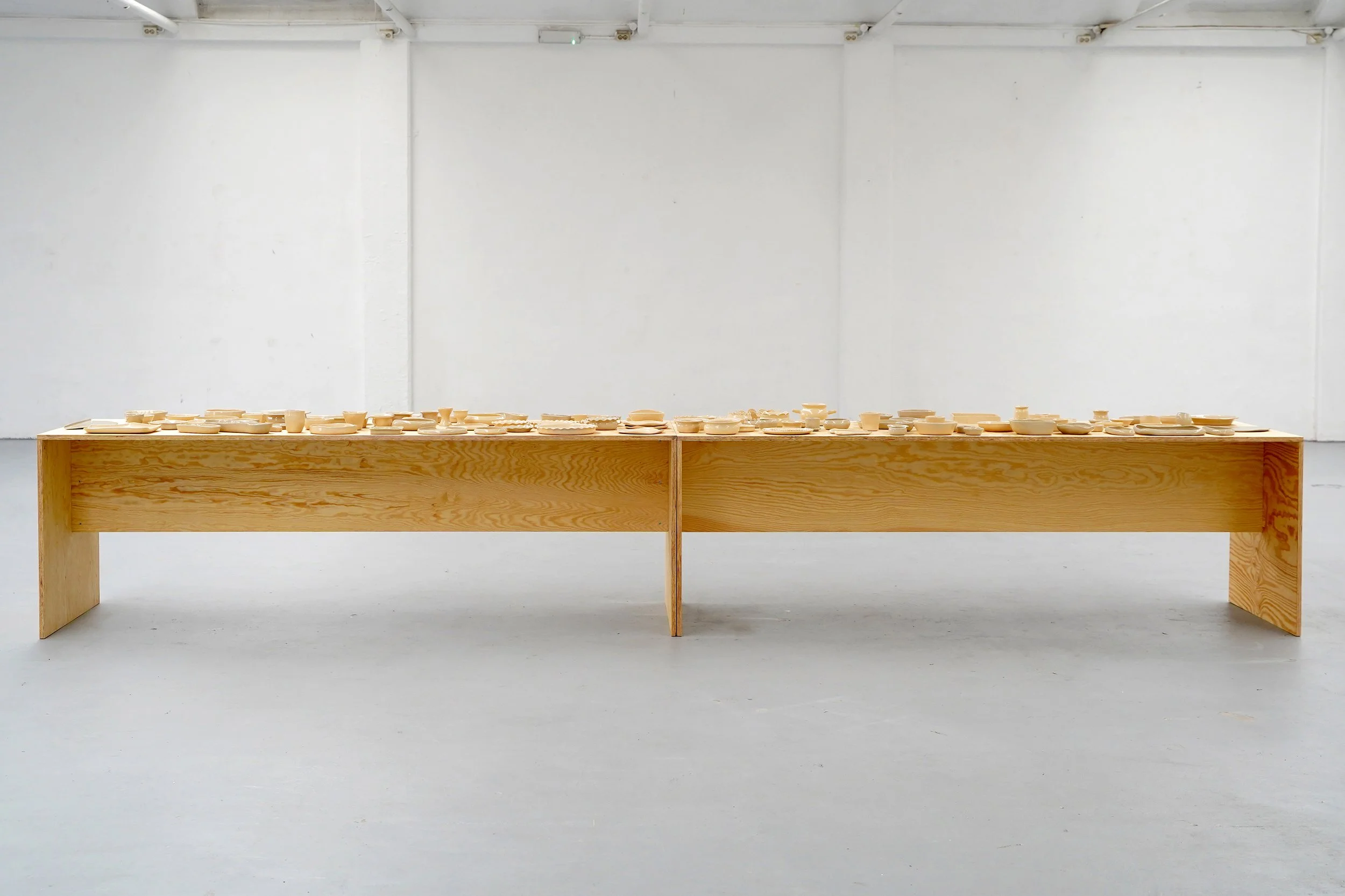
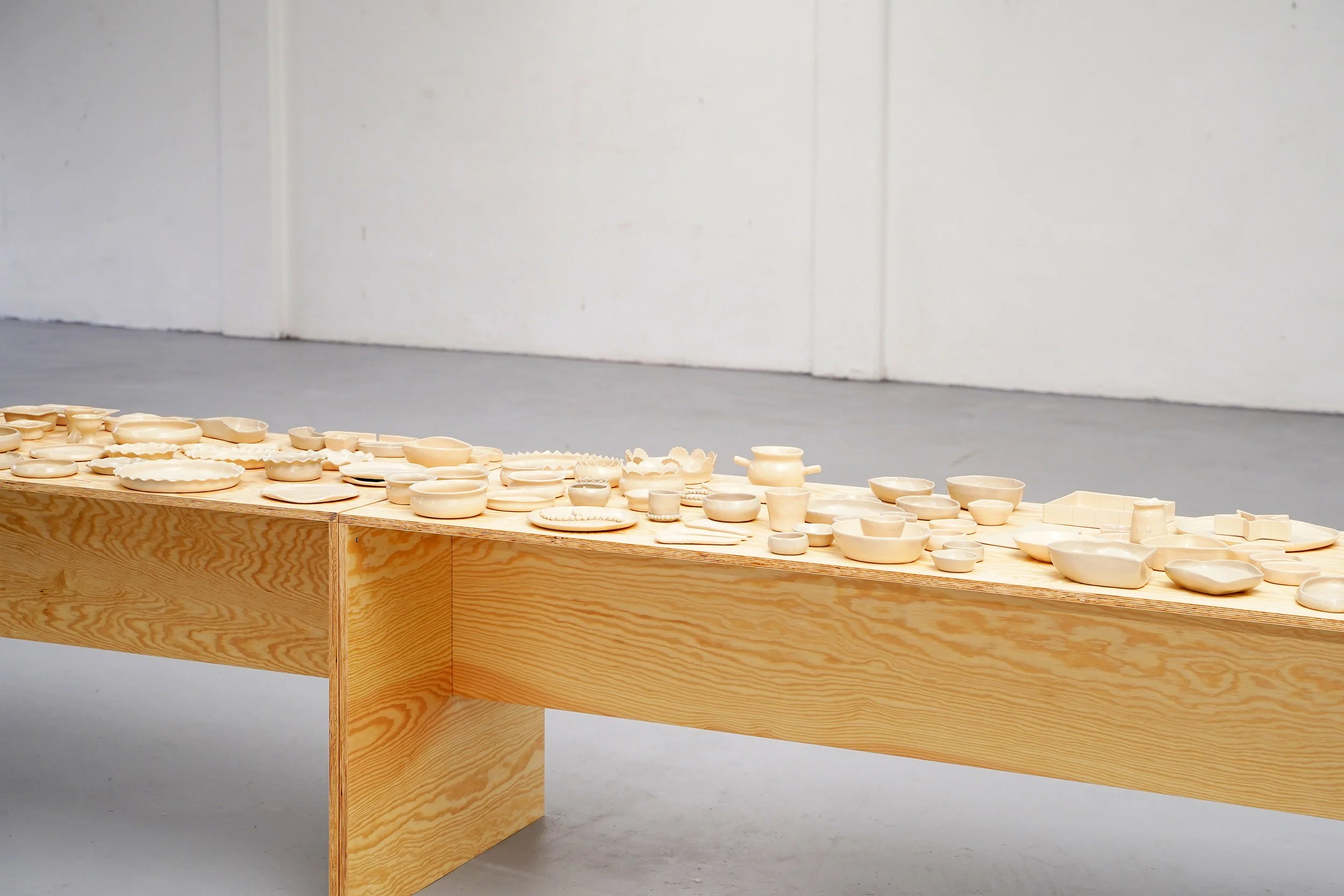
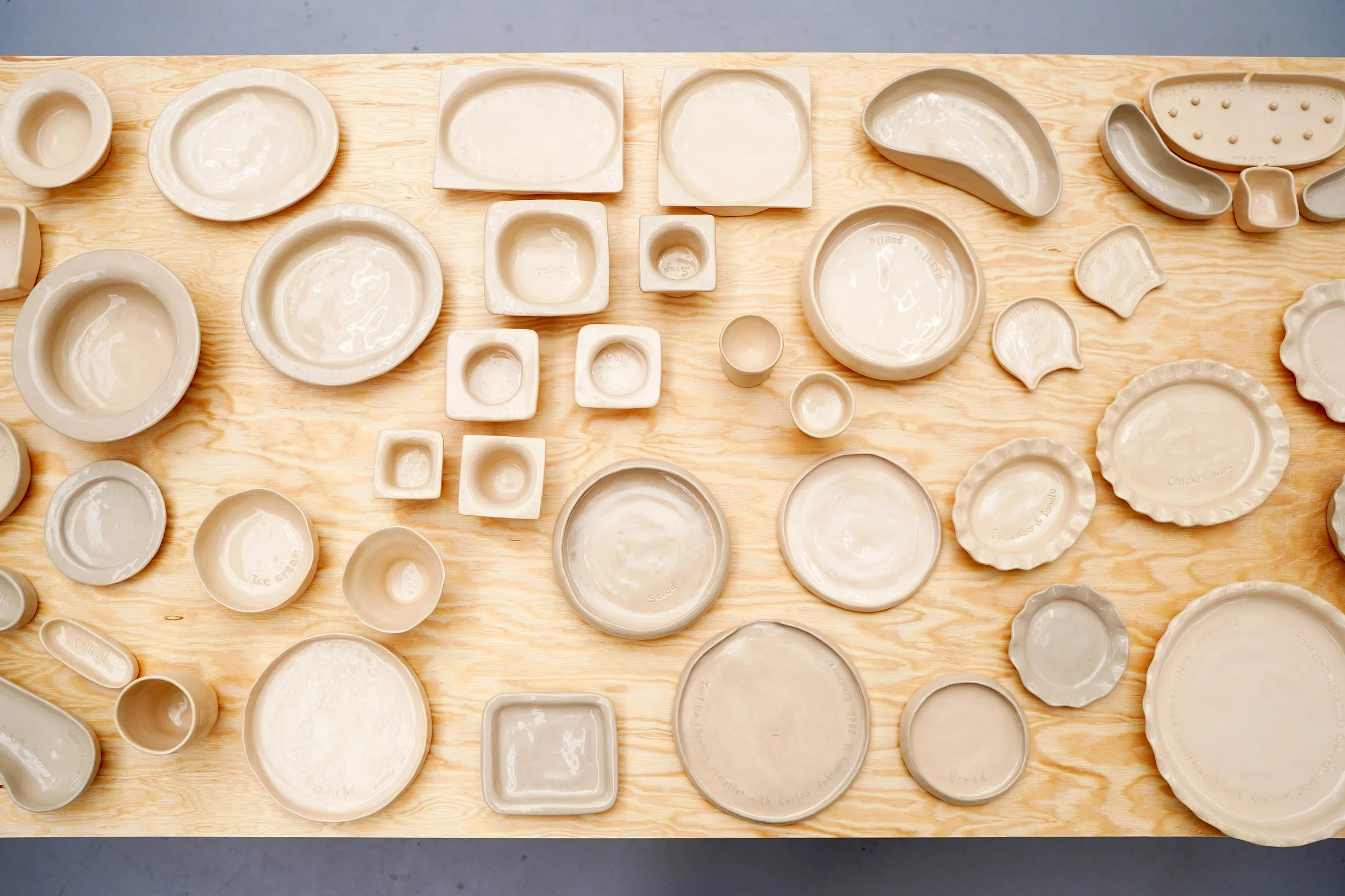
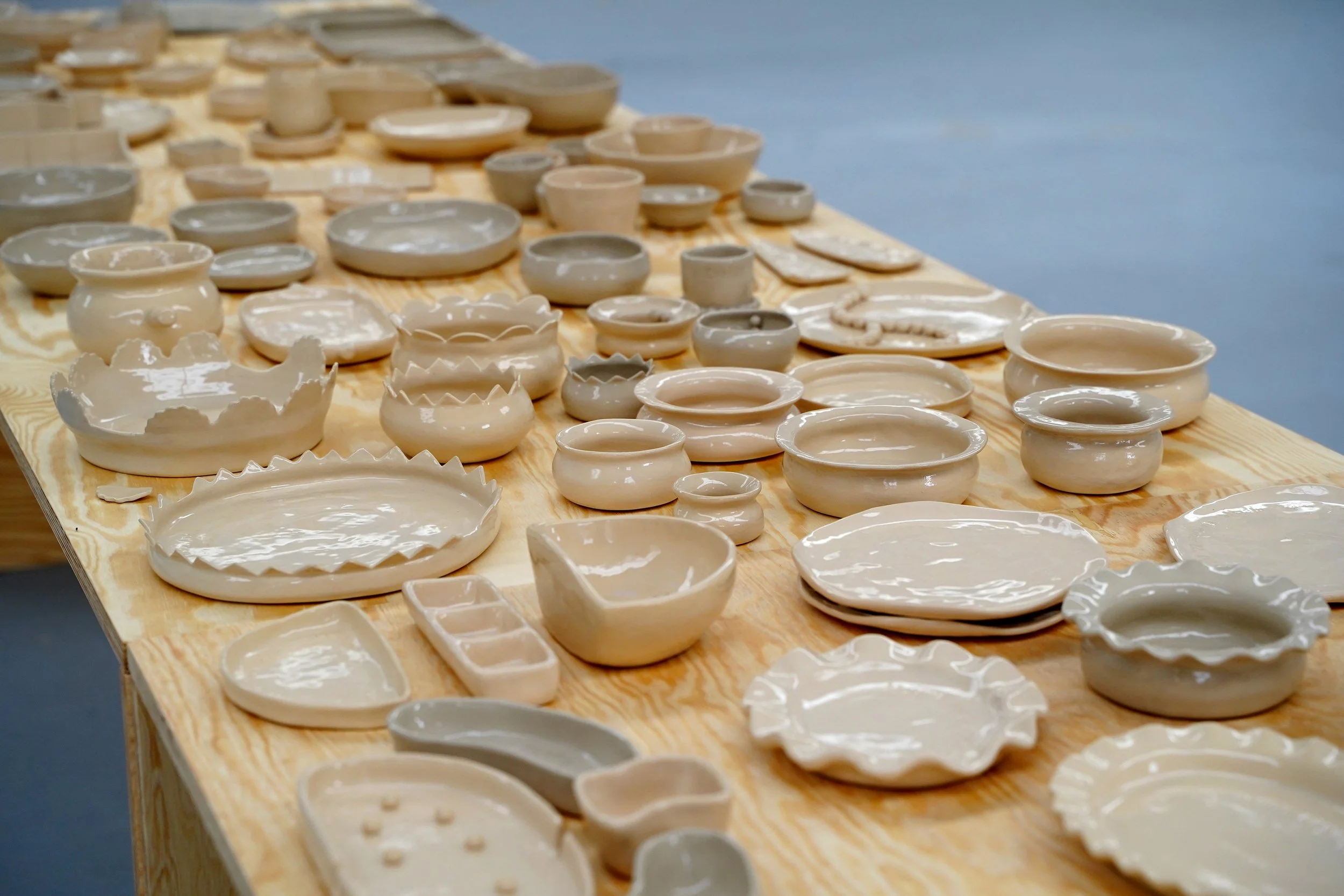
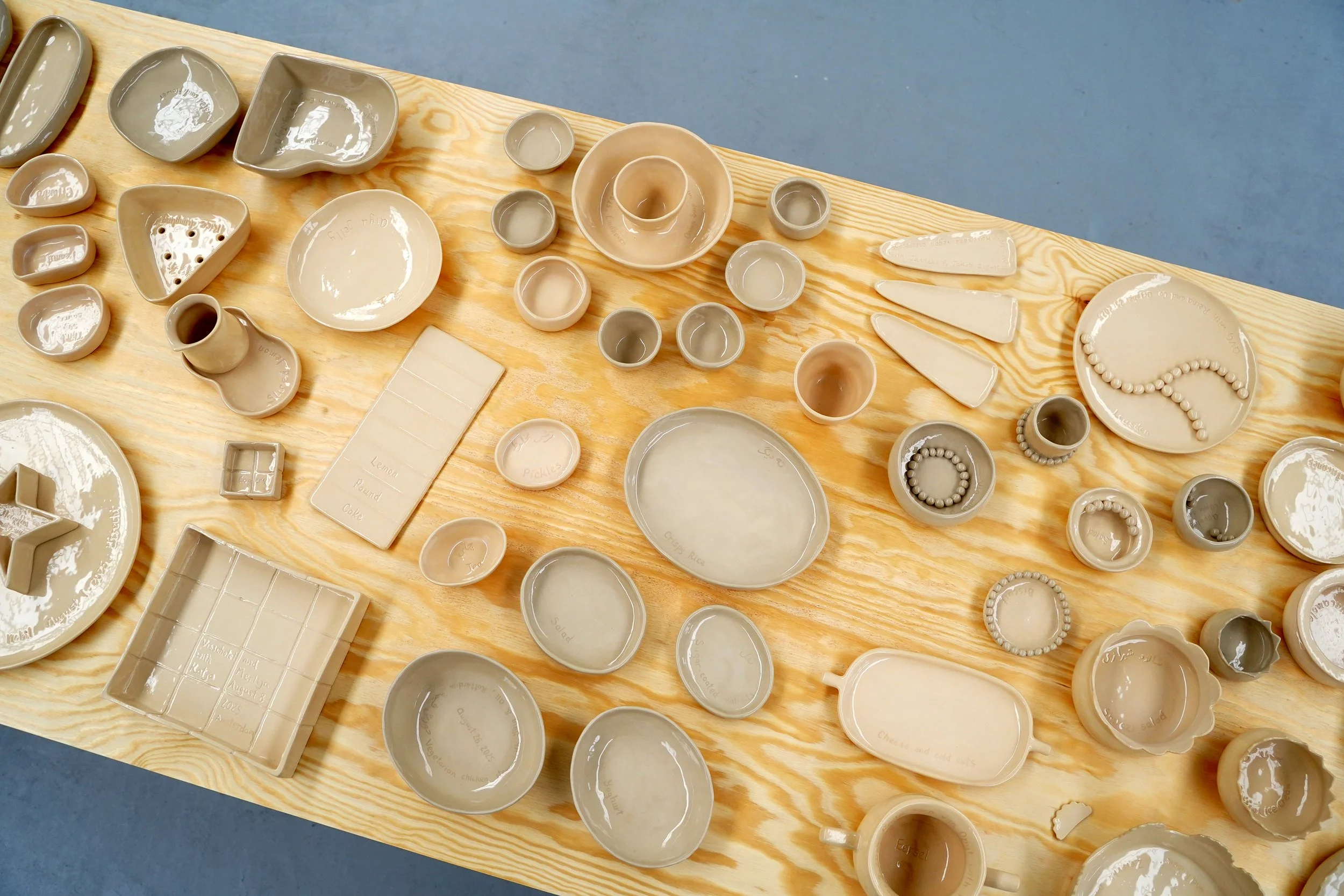
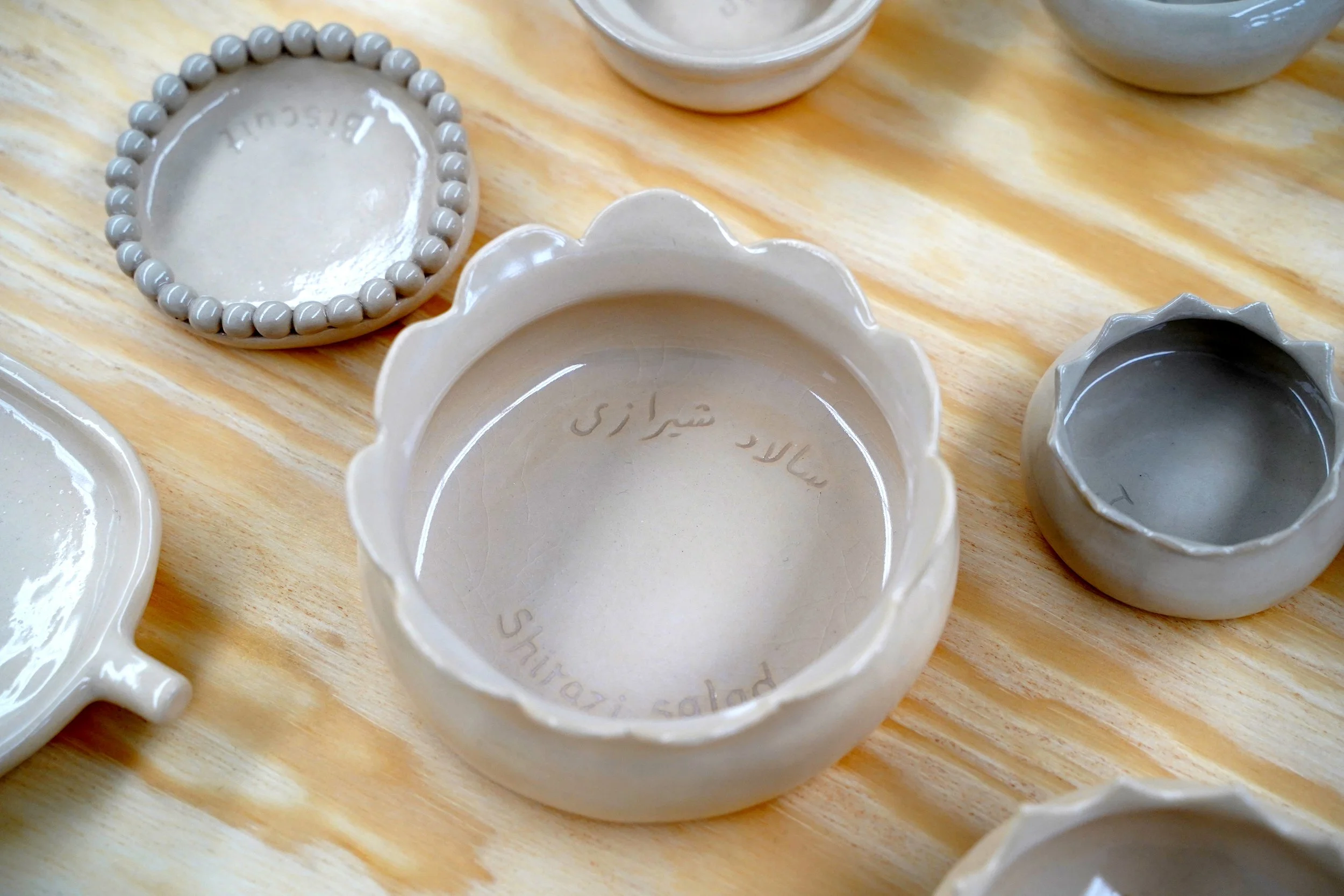
Anas attempts to reflect this complexity through a collection of 27 sets of tableware, representing the meals that he shared with interviewees during his field research in their home kitchens. Personal stories, kitchen spaces, cooking processes, and the personalities of interviewees are interpreted through the form and style of the tableware pieces.
If the food he ate with interviewees was cooked in the Netherlands with locally sourced ingredients, and the meal took place in the Netherlands for the sake of studying Dutch food, can that food be Dutch? If he ate enough of that food, can Anas be Dutch?
MELTING DUTCH POT
Mixed media
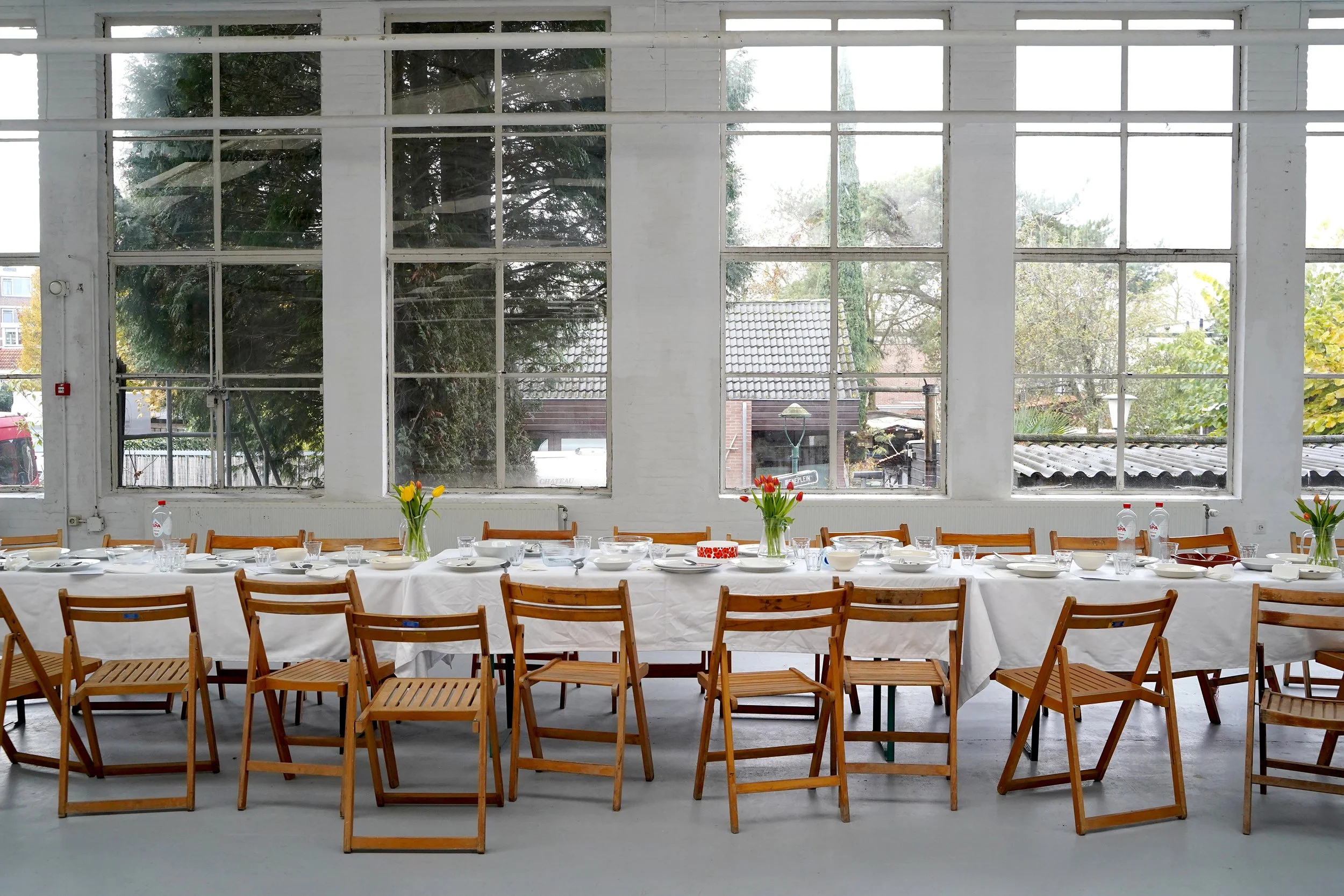
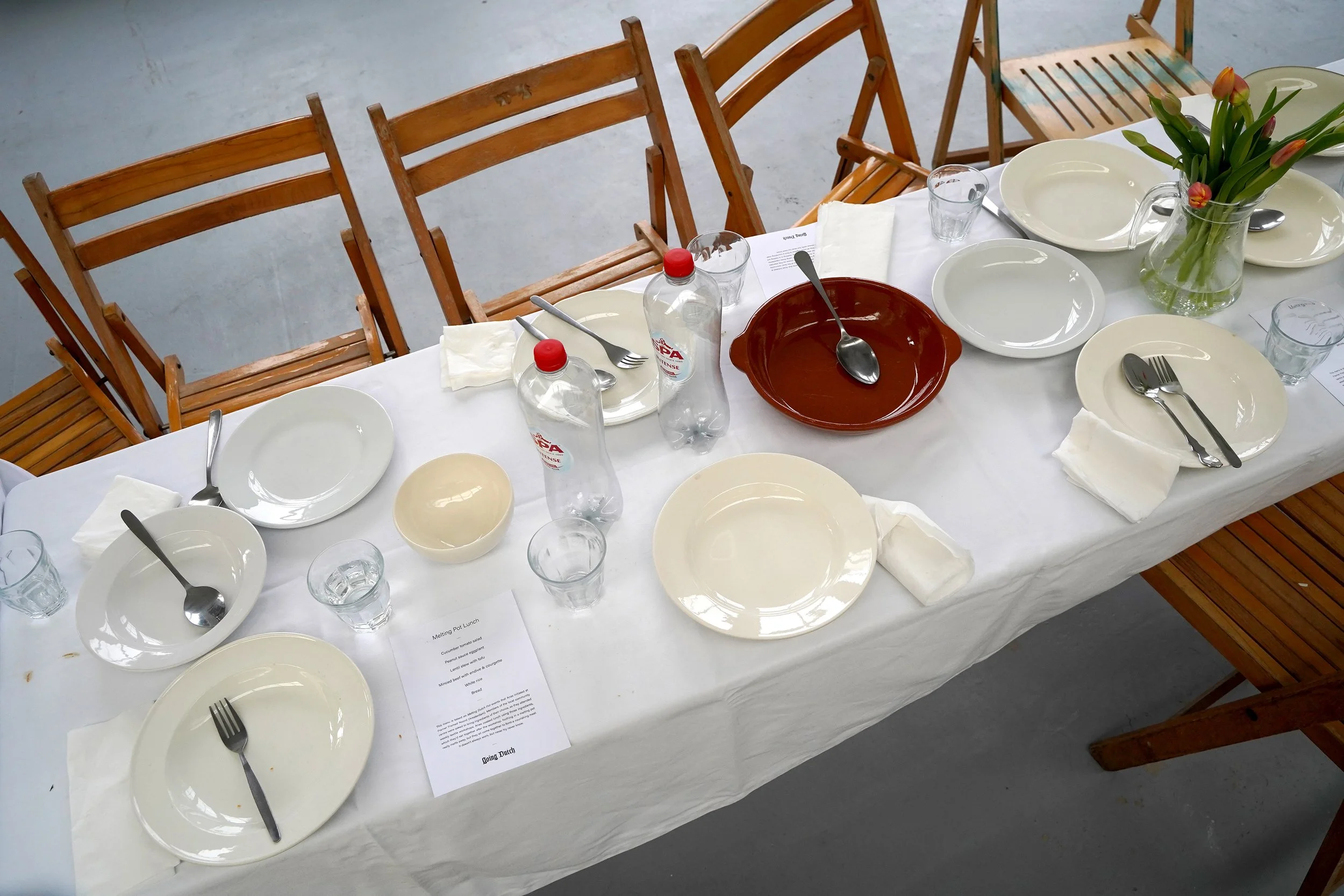
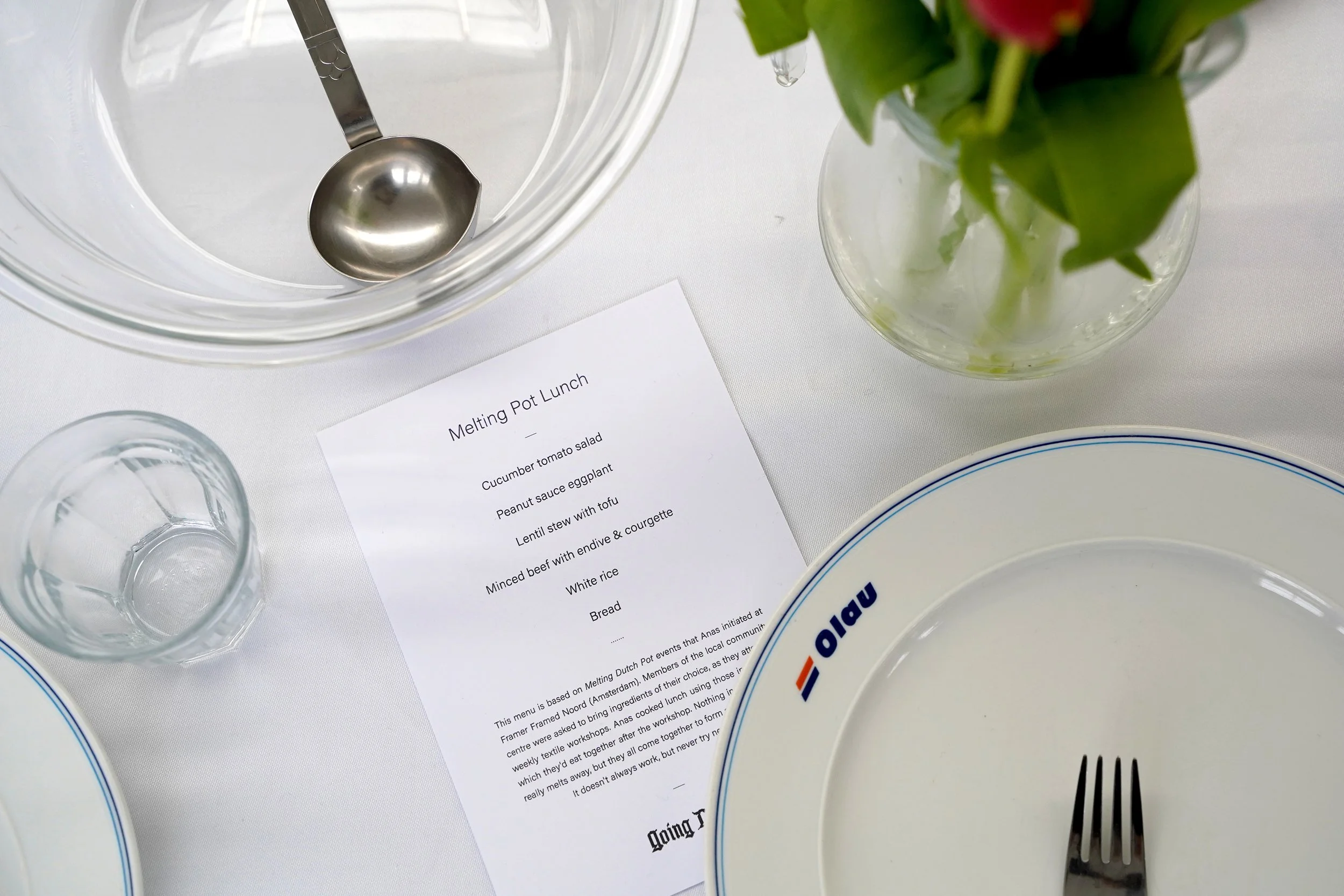
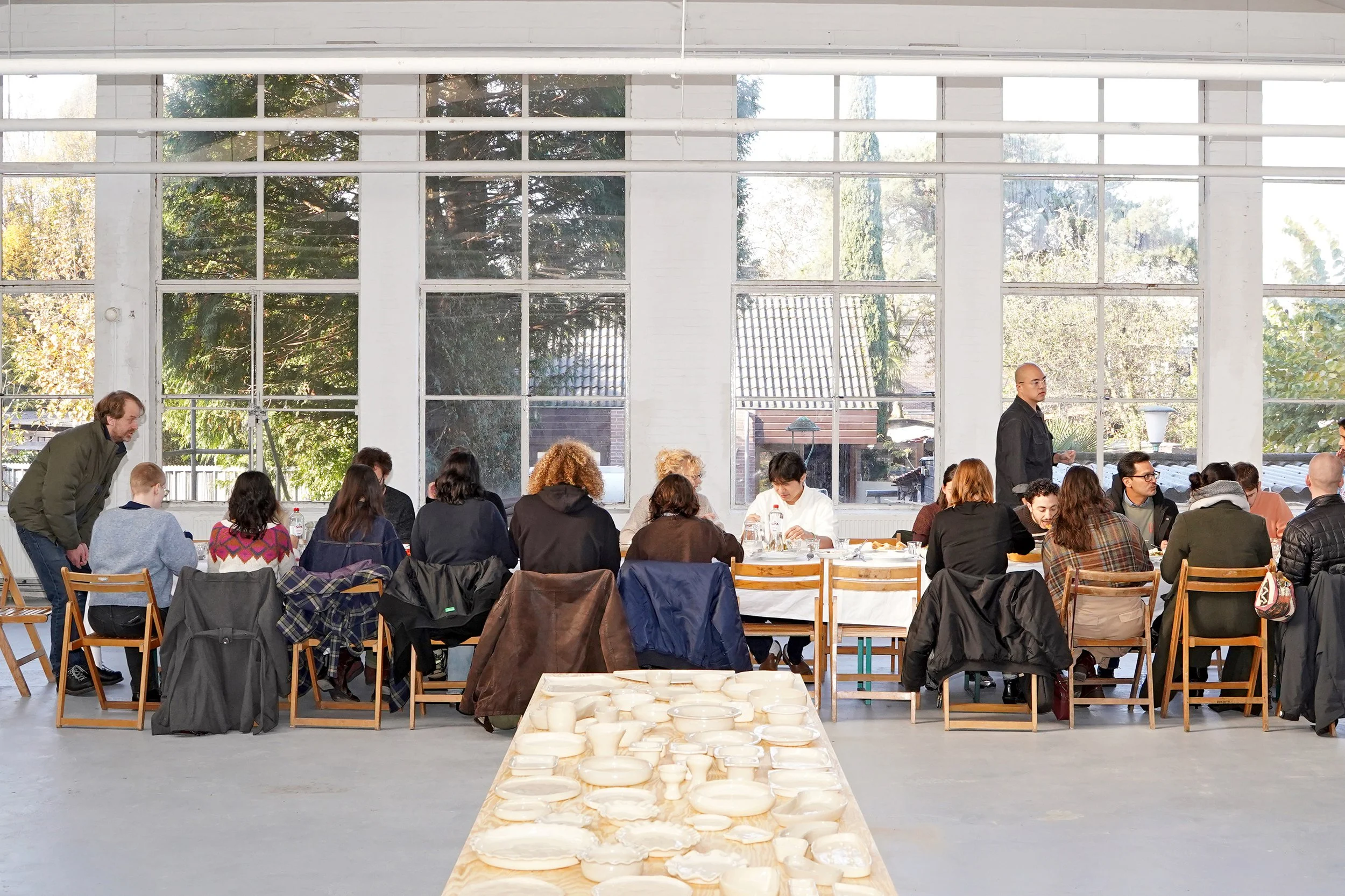
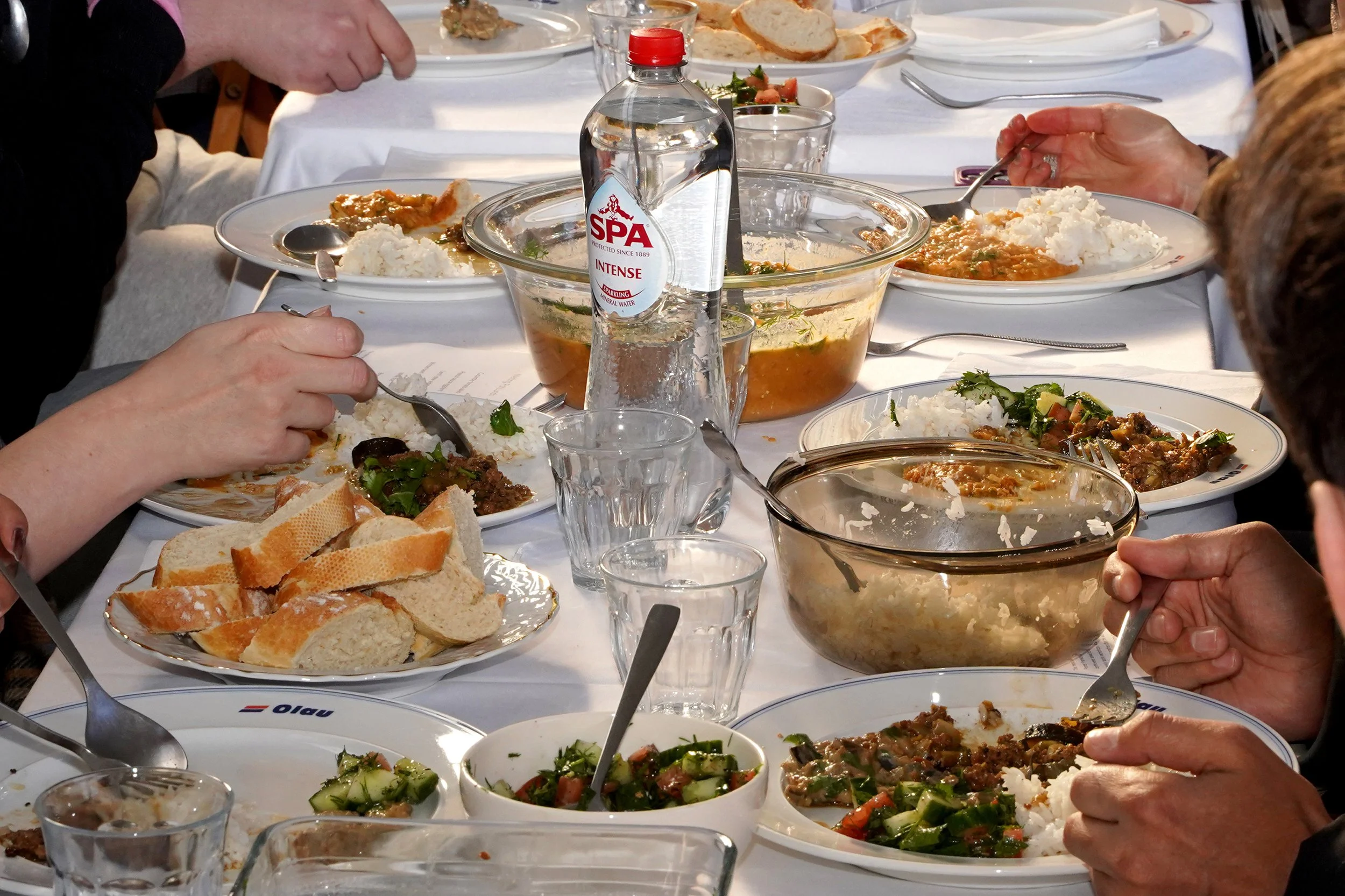
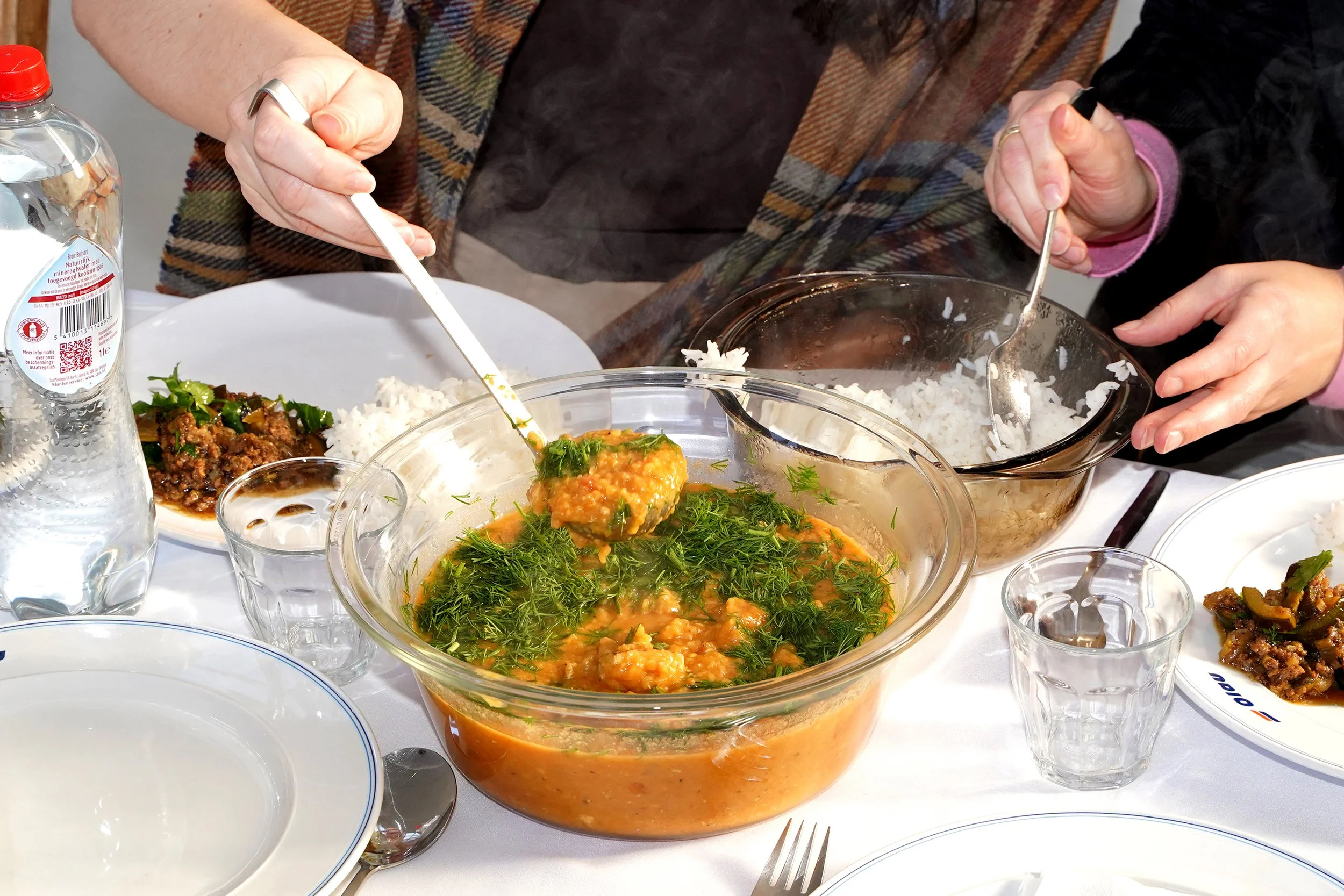
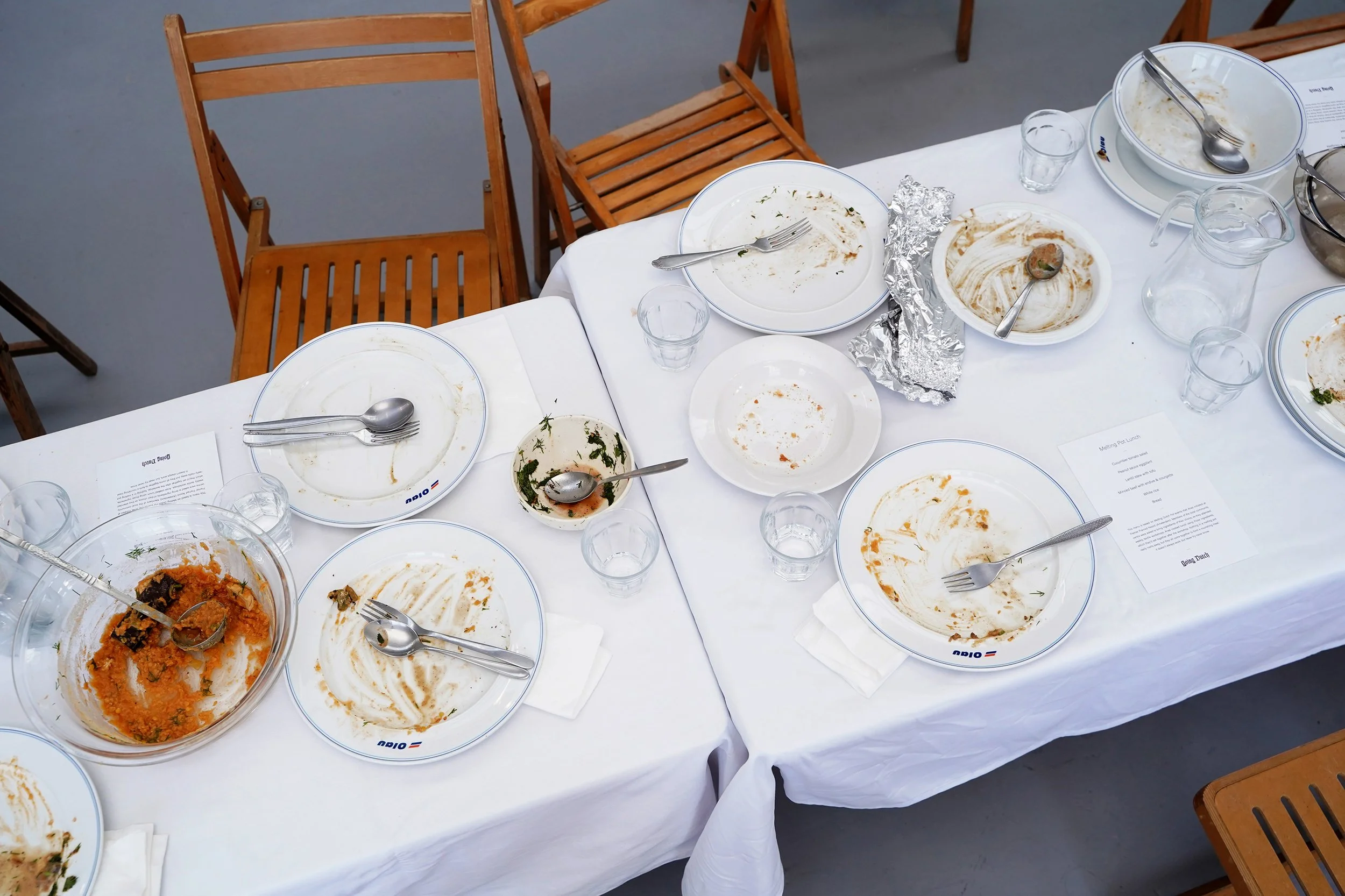
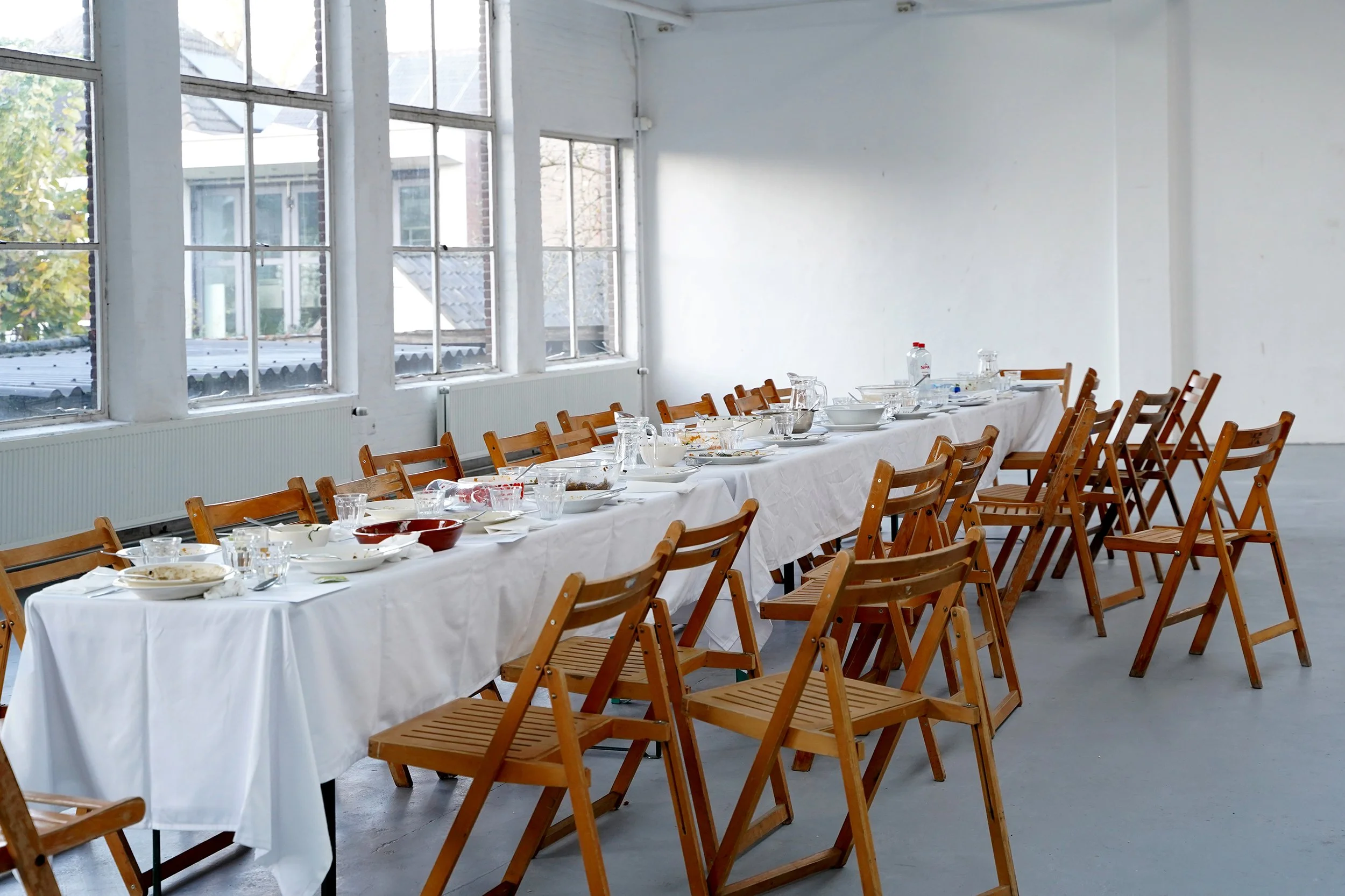
Part of the field research was done in the form of lunch events at Framer Framed Noord, Amsterdam. Members of a local community centre would gather every Monday morning for textile workshops. Anas asked them to bring an ingredient of their choice, and documented the reason behind their choice and how it is usually cooked. Then the ingredients were assembled into lunch by Anas as the locals attended the workshops, at the end of which they had lunch together. The locals came from various social and economic backgrounds, each maintaining their characteristics while existing simultaneously. This is reflected in the dishes cooked in a pot: no ingredients are truly melted into complete fusion, but they form a nourishing meal by coming together.
Selected dishes from the events were recreated at De Fabriek Eindhoven, as a pre-opening meal for the people who welcomed Anas into their homes for his field research.
Acknowledgement
This project was made possible with the support of Stimuleringsfonds Creatieve Industrie and the contribution of all field research participants, and this exhibition was brought to life with the help of the following. Thank you all <3
A+N Studio, Bae Ji Hoon, Leon Bukowski, Ishani Chatterjee, Jasmine Chang, De Fabriek Eindhoven, Koen Dijkman, Dragon King Feast Crew, Jasmine Fernandez, Francisco Fialho, Framer Framed Noord, Maikel Gommans, Cleo Goossens, Kim Ha Yeon, Klei Café, KRAFTMANN, Hsiang Lin Kuo, Lee Kyung Mi, Lesley Lock, Gabriele Nasole, Nieuwe Instituut, Nul Zes Family, Marjolein Ossewaarde, Maria Daniela Palomá Iriarte, Jules Sgro, Tessa Why, Pythia Winia, Seda Yıldırım